
Roof Restoration Blog | Richmond VA & Central Virginia
Check Your Roof After Installing Holiday Lights
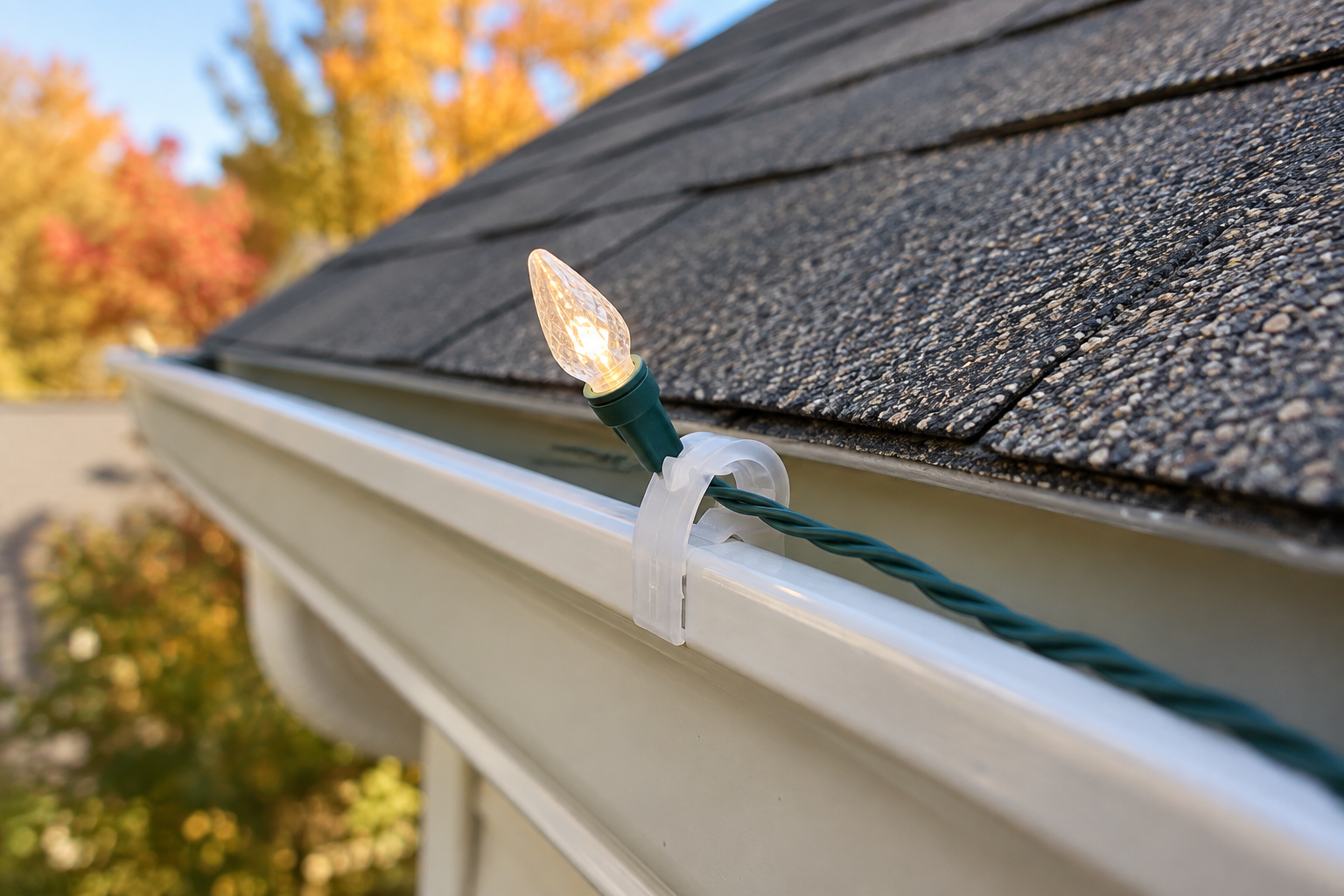
Holiday lights can make a home feel welcoming, but the job is not quite finished when the last bulb turns on. A short follow-up look at the roofline can help confirm that the clips, shingles, gutters, and cords still appear secure.
For Virginia homeowners, this is a simple roof-longevity habit. The goal is not to assume something went wrong. It is to notice a small concern early, before winter wind and rain have a chance to make it worse.
Why a post-installation roof check matters
Holiday-light installation often happens around gutters, eaves, fascia, and the lower edge of the roof. Those areas are designed to direct water away from the home, so decorations should not puncture, overload, or pull against them.
Roofing manufacturers recommend plastic clips that attach without nails or staples. Penetrating fasteners can create small openings in shingles, fascia, siding, or electrical-cord insulation. Pulling hard on a light strand can also strain gutters or disturb materials along the roof edge.
A quick check after installation gives you a chance to confirm that everything still looks orderly and supported.
Start with a ground-level inspection
You do not need to walk on the roof to perform the first check. In fact, roof manufacturers advise homeowners to avoid unnecessary rooftop walking, particularly when shingles are cold, wet, or difficult to access safely.
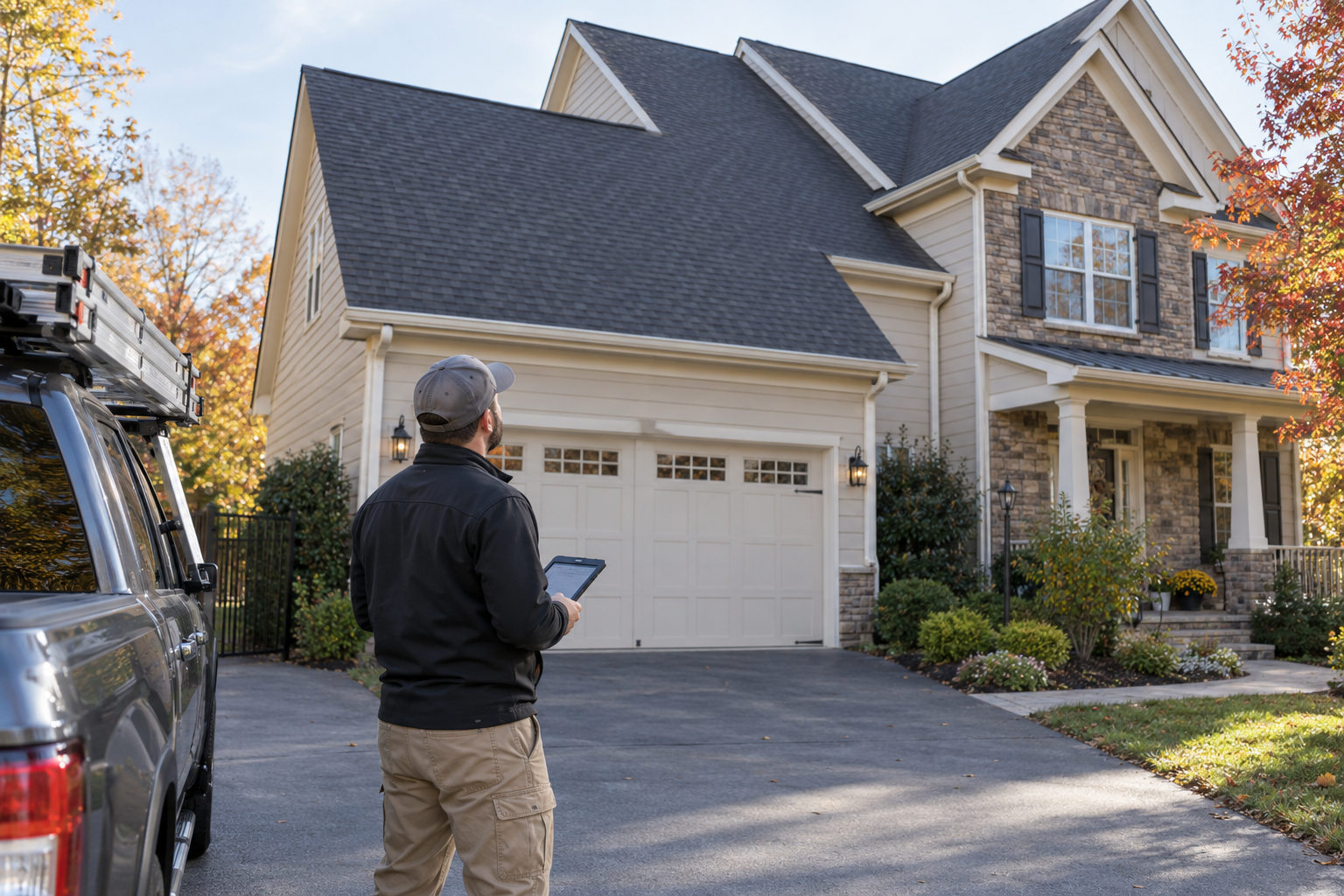
Stand in several safe locations around the home and look along the roofline. Binoculars or a phone camera with zoom can help you examine higher areas without climbing.
Pay attention to places where lights change direction, span a corner, cross a downspout, or meet an extension cord. These transition points can place extra pull on clips and wiring.
What to look for after the lights go up
Focus on visible changes rather than trying to diagnose the entire roofing system. Look for:
- Loose, twisted, or missing clips: A clip that has shifted may allow the strand to pull against a gutter, shingle edge, or nearby surface.
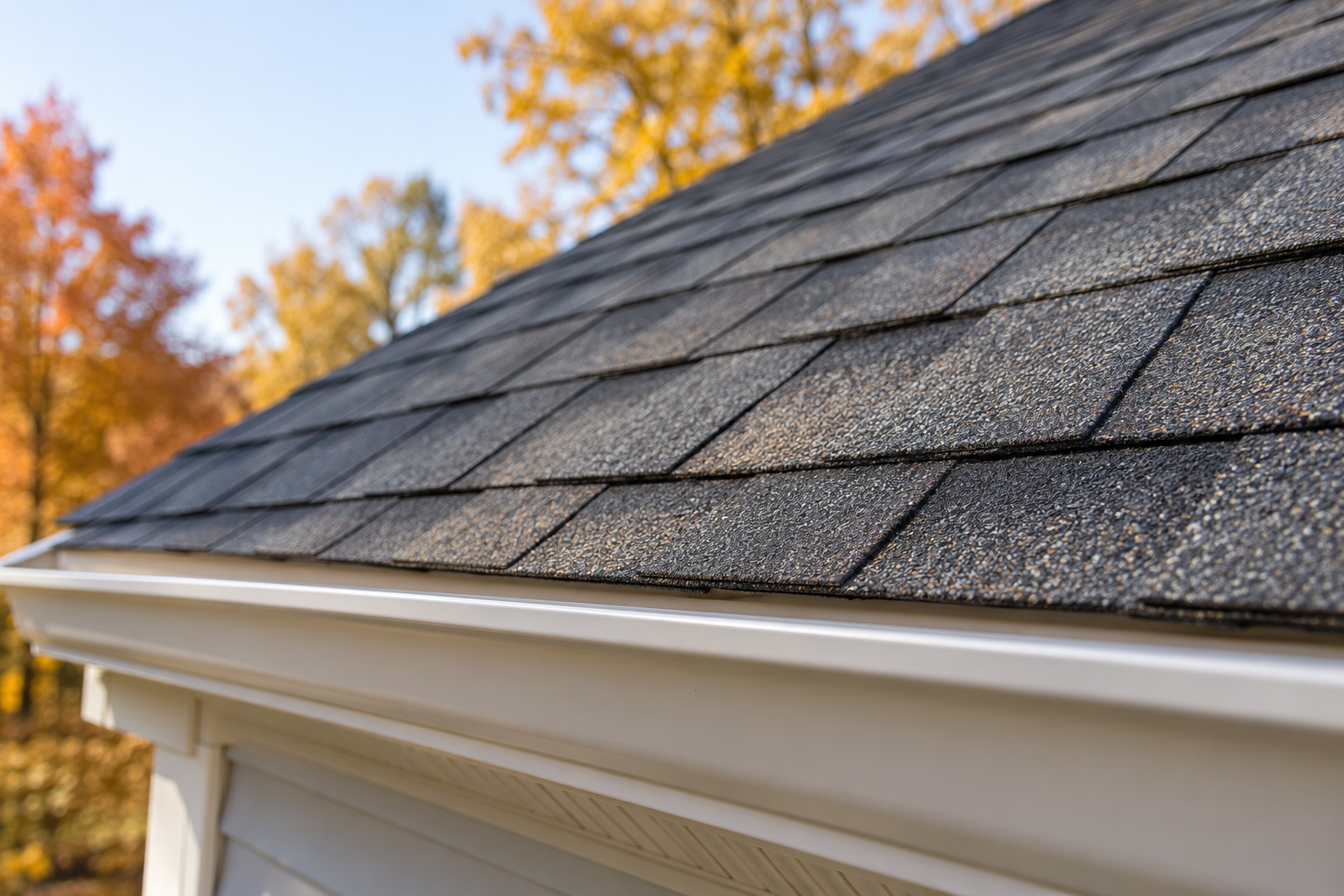
- Lifted or disturbed shingle edges: Shingles should lie consistently with the surrounding roof. Do not try to press them back into place from a ladder or rooftop.
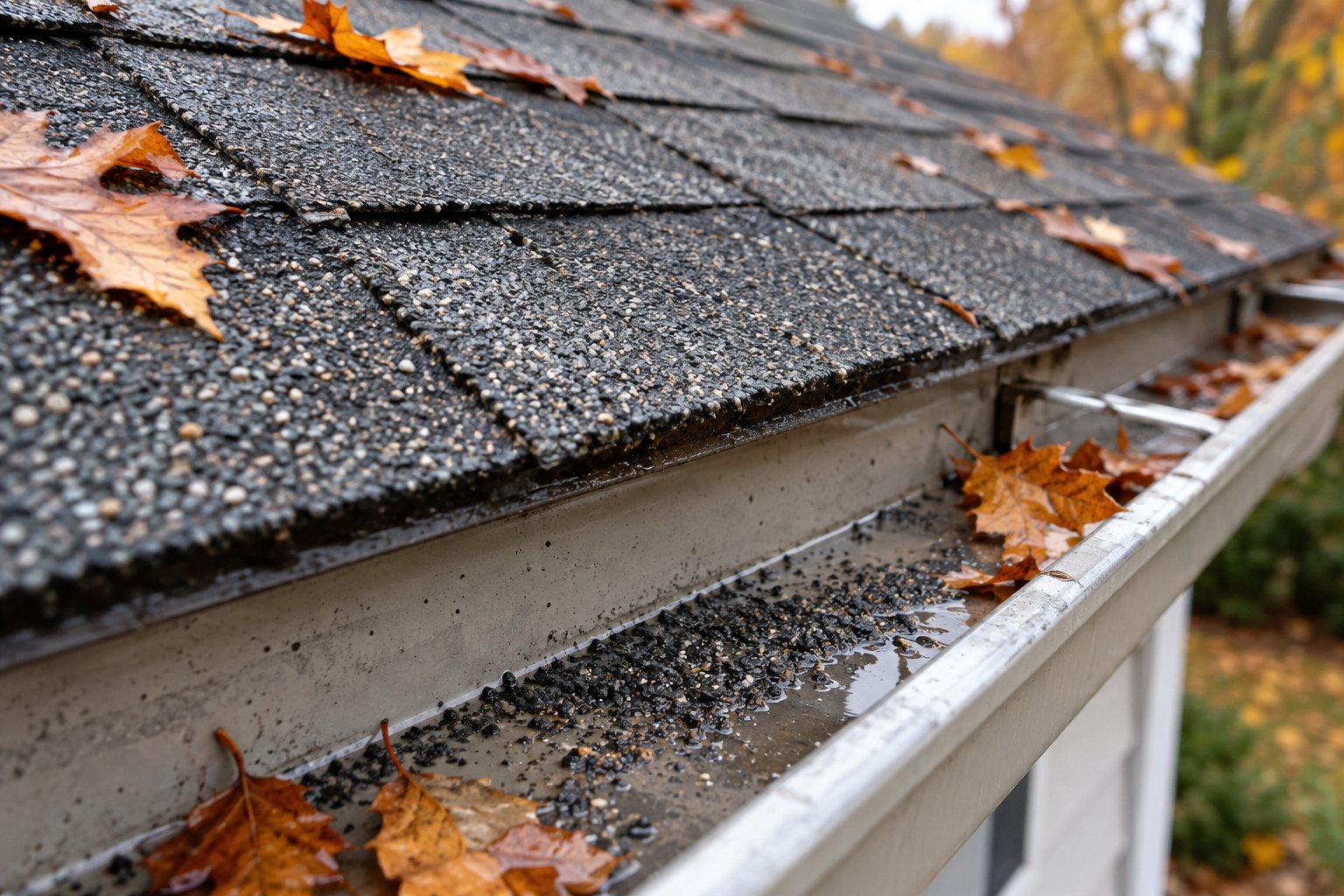
- Sagging or separated gutters: Check whether any gutter section appears lower, twisted, or pulled away from the fascia.
- Cords under tension: Light strands should not look stretched tightly between attachment points or wrapped around sharp edges.
- Nails, screws, or staples: If penetrating fasteners were used, schedule a professional roof evaluation rather than attempting a quick patch yourself.
- Heavy rooftop decorations: Oversized decorations can add weight and catch wind. Lawn or porch placement is generally safer for the roof.
If everything looks straight and secure, no additional action may be needed. If something appears questionable, take a photograph from the ground and contact a qualified professional.
Use clips instead of punctures
Plastic holiday-light clips are designed to support light strands without driving a fastener through the roofing material. Depending on the clip style, they may attach to the gutter edge, eave, siding, or another compatible surface.
The correct clip depends on the light strand and the part of the home where it will be installed. The important principle is simple: avoid making new holes in the roof or exterior just to hold temporary decorations.
Clips should also be spaced so the strand is supported without excessive pulling. Lightweight decorations are easier on gutters and roof edges than heavy ornaments or large rooftop displays.
Protect gutters as well as shingles
Gutters are part of the roof’s water-management system. A row of lightweight bulbs may seem insignificant, but uneven weight, tightly stretched cords, or a hurried installation can place unnecessary strain on the gutter edge.
After installation, look at the gutter from both ends when possible. A smooth, consistent line is what you want to see. A new dip, twist, or gap near the fascia deserves attention.
Also confirm that cords and clips do not block downspout openings. During Virginia’s fall and winter weather, gutters need a clear path to move rainwater away from the roof and foundation.
Do not turn a quick check into a risky climb
If you notice a loose clip or uneven section, resist the urge to walk onto the roof. Asphalt shingles can be damaged by unnecessary foot traffic, and falls remain a serious risk.
If the area can be reached safely from an appropriate ladder, follow the ladder manufacturer’s instructions and work with another adult present. If access is difficult, the roof is steep, or the surface is wet or windy, call a professional.
The safest inspection is the one that does not create a new problem while trying to correct a small one.
Check the roofline again when decorations come down
Removal deserves the same care as installation. Roofing manufacturers recommend taking clips down individually rather than pulling an entire light strand from the ground. Yanking the cord can damage the lights, pull on gutters, or disturb shingles if a clip is caught.
Once the decorations are removed, repeat the ground-level check. Look for loose materials, punctures, debris, or sections that appear different from the rest of the roofline.
Small maintenance habits support roof longevity
Checking the roofline after decorating is a small task, but it reflects a larger idea: the roof you already own deserves regular attention. Catching a loose gutter, disturbed shingle, or improper fastener early may make the next step simpler and more manageable.
Richmond Roof Rejuvenation helps homeowners across Virginia understand the condition of their existing asphalt roof and make responsible decisions about maintenance, rejuvenation, repair, or replacement. The recommendation should always follow the roof’s actual condition.
If you would like a professional look before winter weather arrives, schedule a free roof check at richmondroofrejuvenation.com.