
Roof Restoration Blog | Richmond VA & Central Virginia
Early Signs Your Roof Needs Attention—Before It Leaks
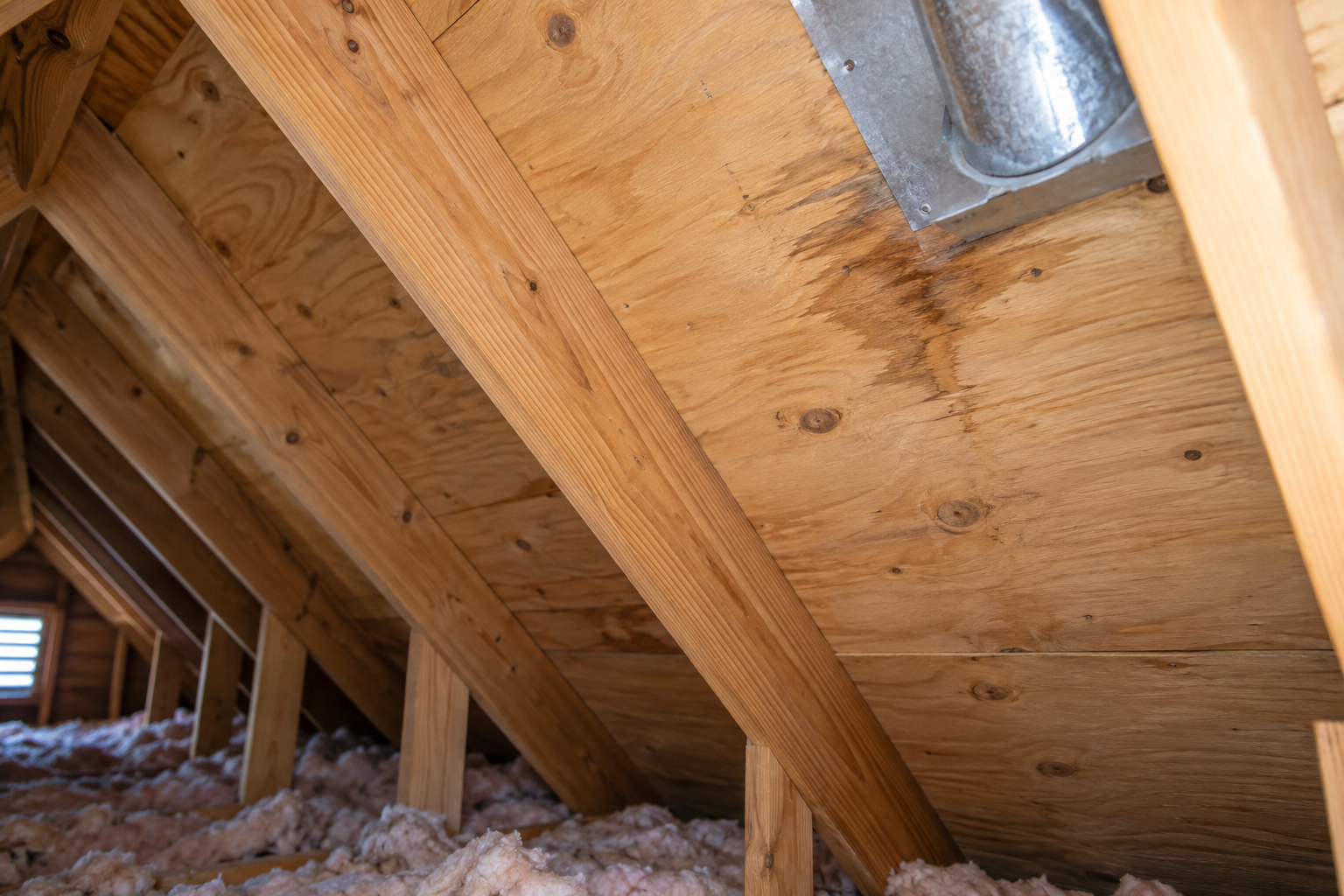
Many homeowners begin thinking about the roof only after water appears indoors. But a visible leak is not always the first sign that something needs attention. Asphalt shingles, flashing, gutters, ceilings, and attic surfaces can show smaller changes before the problem becomes obvious during heavy rain.
Noticing an early warning sign does not automatically mean the roof needs replacement. It means the condition is worth evaluating. A timely inspection can help you understand whether the roof needs routine maintenance, a targeted repair, rejuvenation, or a different solution based on its actual condition.
Start with the shingles you can see from the ground
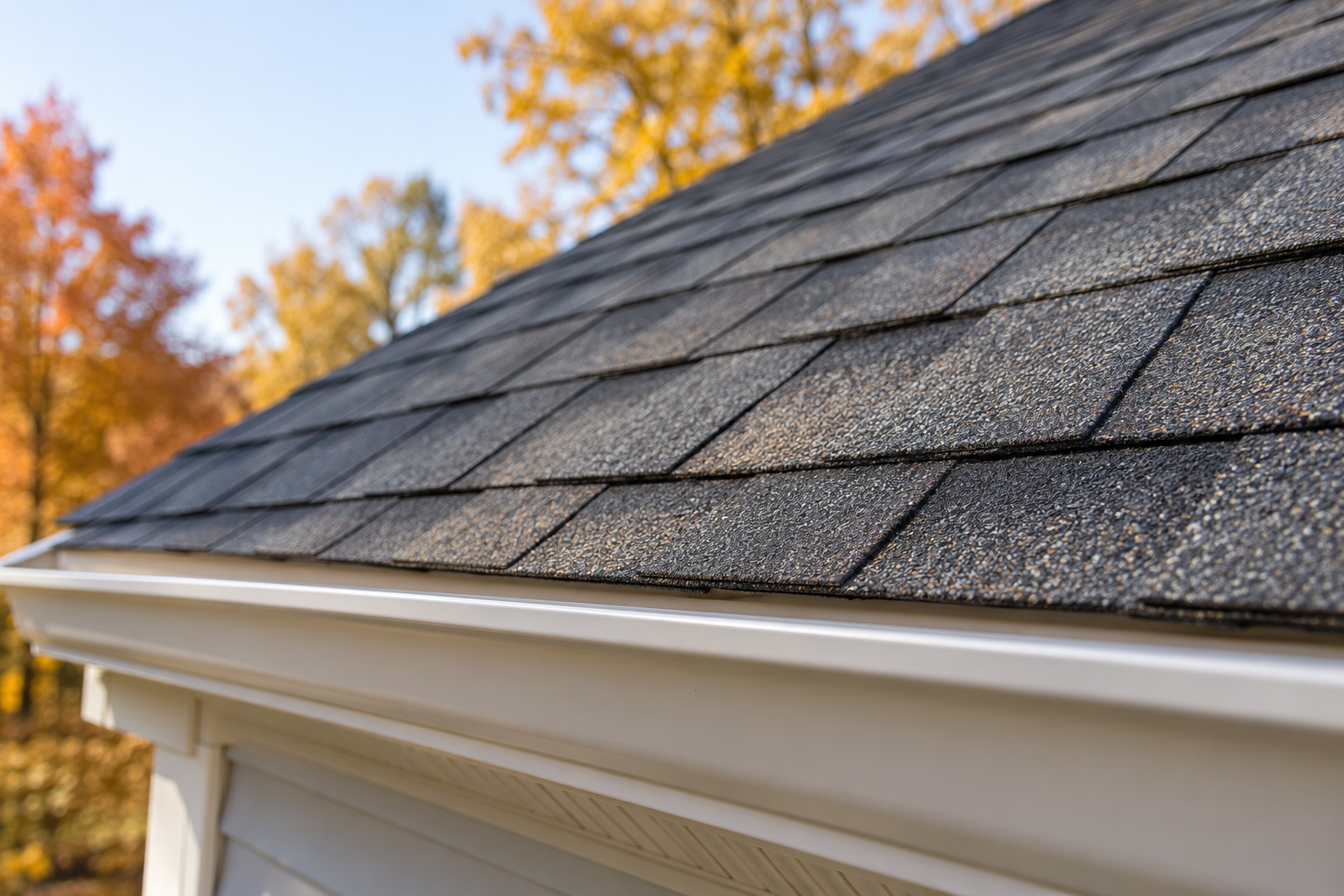
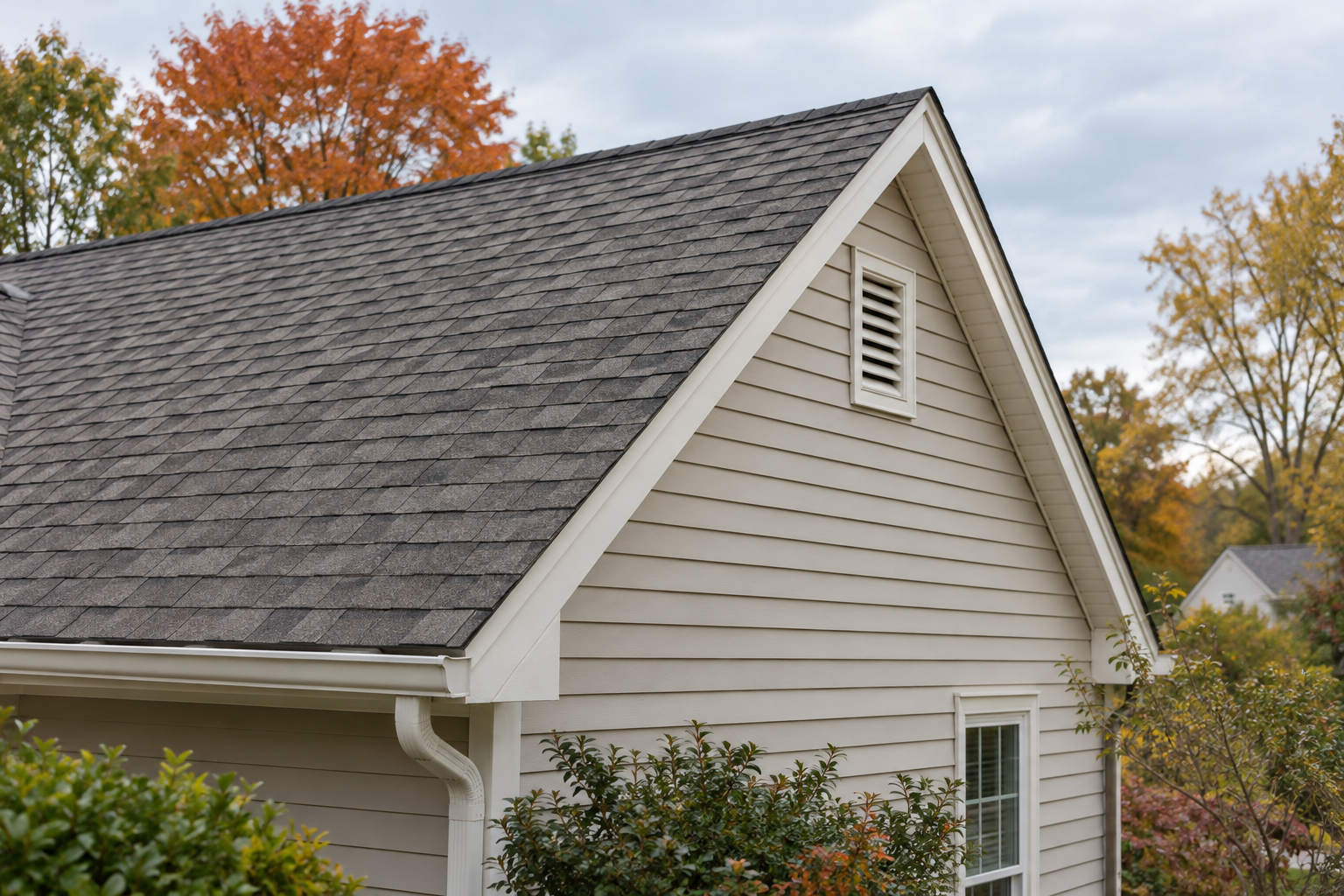
You do not need to climb onto the roof to perform an initial visual check. Stand at a safe distance and look at each visible roof slope. Binoculars can help you see details without leaving the ground.
Watch for:
- Curling shingle edges: Corners or lower edges that begin lifting may indicate aging or weather exposure.
- Cracked or split shingles: Cracks can create vulnerable areas that deserve professional attention.
- Missing or shifted shingles: A gap or shingle that no longer sits in line with the surrounding courses may leave part of the roof system more exposed.
- Dark or uneven patches: A visibly different area can indicate surface wear, staining, repair history, or granule loss. A professional can help identify the cause.
The goal is not to diagnose the entire roof from the yard. It is to notice changes that justify a closer look.
Pay attention to granules in gutters and downspouts
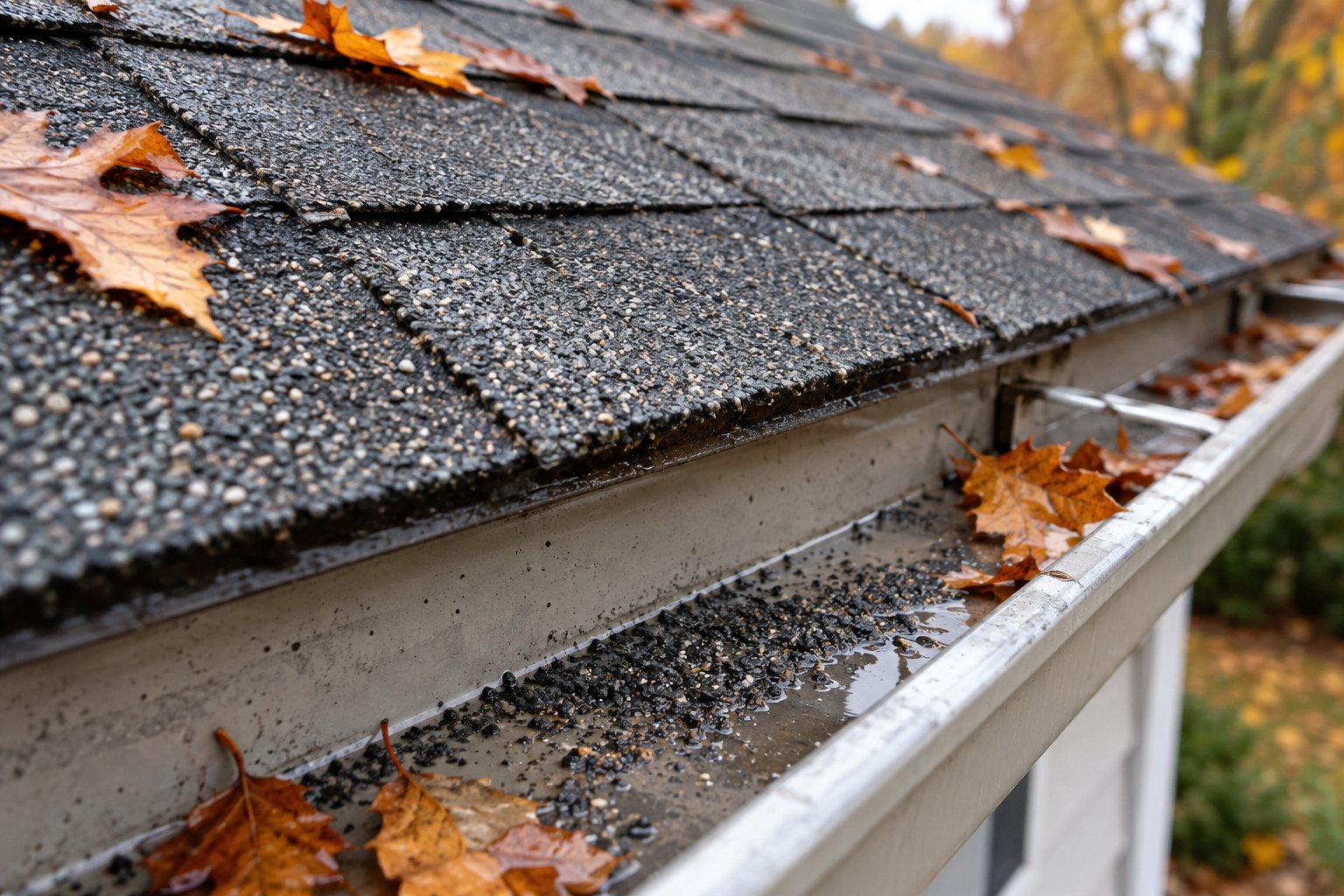
Mineral granules form the textured surface of asphalt shingles. Some loose granules can be expected, especially on a newer roof or after weather events. What deserves attention is a noticeable increase, repeated accumulation, or roof areas that begin looking unusually dark or bare.
Check the bottom of clean gutters and the discharge area beneath downspouts. If granules continue collecting or appear alongside other signs of shingle wear, schedule an inspection rather than making assumptions from the granules alone.
Look around flashing and roof openings
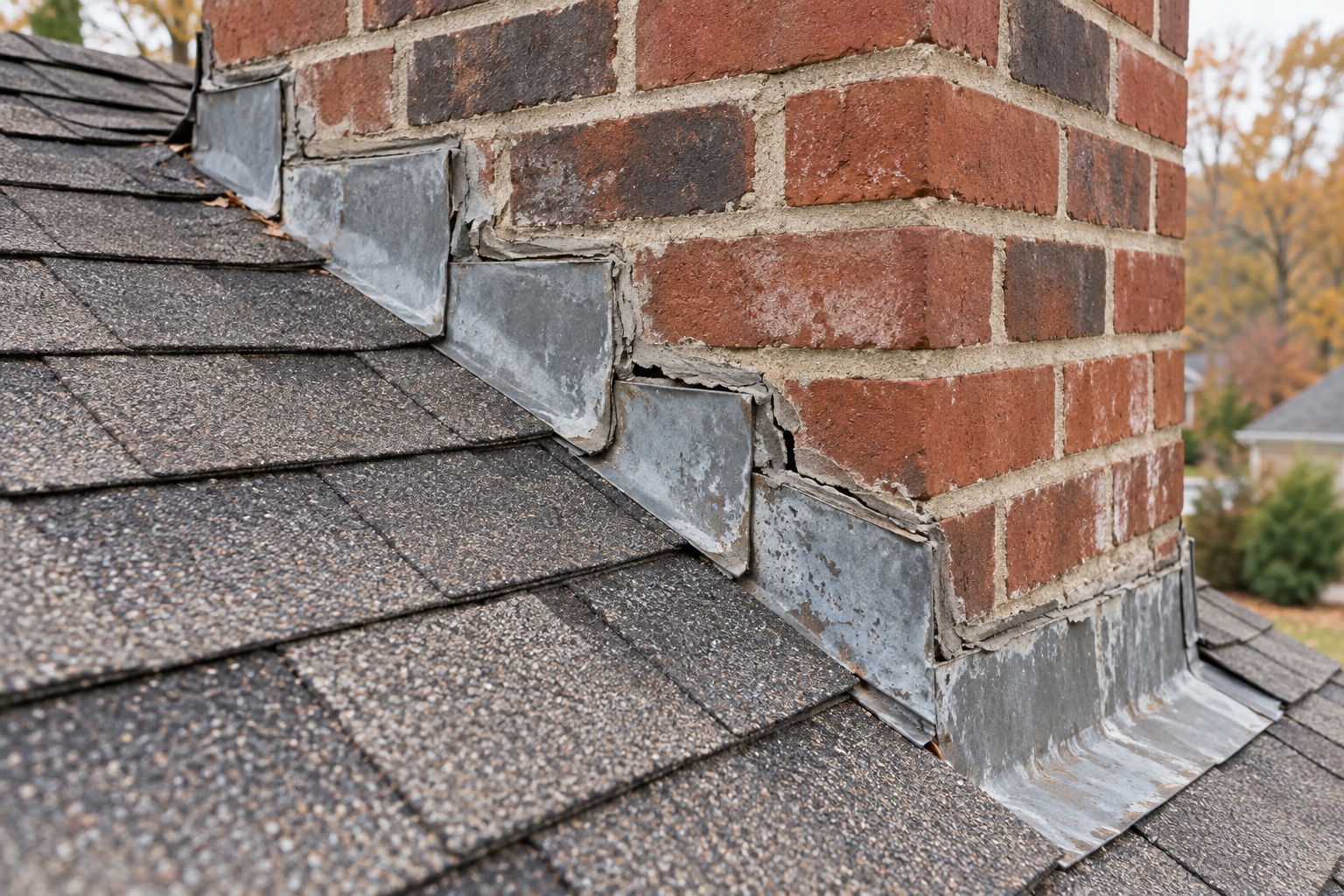
Flashing helps direct water away from joints and roof penetrations. It is commonly found around chimneys, plumbing vents, skylights, walls, and other places where the roof surface changes.
From the ground, look for flashing that appears:
- Bent or detached
- Lifted away from the surrounding surface
- Rusted or visibly deteriorated
- Surrounded by damaged or displaced shingles
These details may be difficult to evaluate safely from the yard. If something looks different, a professional roof inspection is the appropriate next step.
Check ceilings and attic surfaces
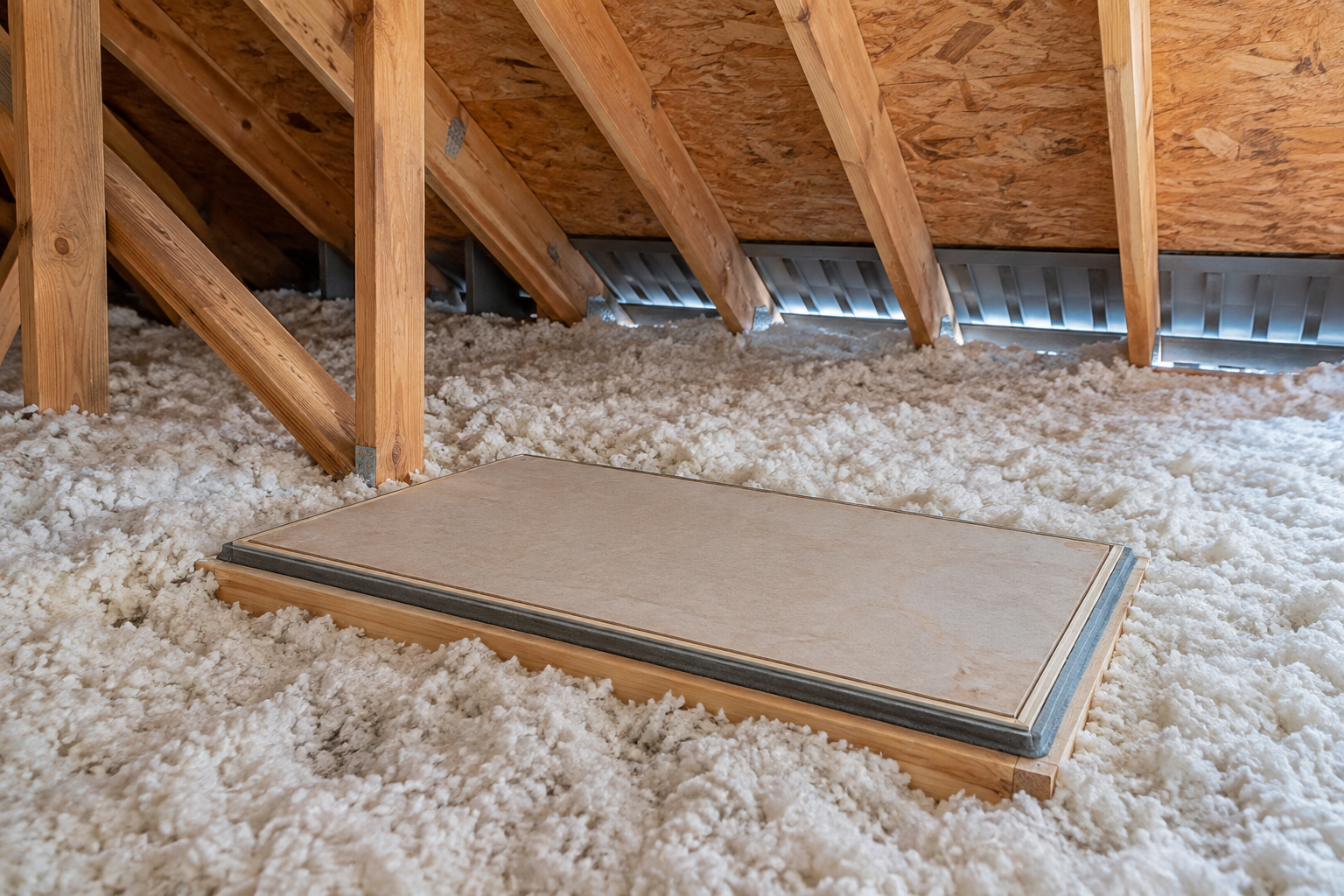
The earliest sign may appear inside the home instead of on the shingles. After rain, look at ceilings, upper walls, and accessible attic areas for changes.
Possible warning signs include:
- Brown or yellow ceiling stains
- Peeling or bubbling paint
- Damp or discolored attic insulation
- Dark streaks or localized staining on roof decking
- A persistent musty odor near the attic
- Daylight visible through an unexpected opening
Moisture can come from more than one source, so an interior stain does not prove where water entered. Roofing, plumbing, condensation, and ventilation conditions can sometimes create similar symptoms. A professional evaluation can help trace the source instead of relying on a guess.
Notice changes in the roofline and drainage system
Step back far enough to see the general shape of the roof. A roofline that appears newly uneven, dipped, or sagging should be evaluated promptly. Also look for gutters that are pulling away, overflowing, or holding debris that prevents normal drainage.
Gutters and downspouts are part of the home’s water-management system. When they cannot move rainwater away effectively, water may collect near roof edges, fascia, siding, or the foundation.
One warning sign is not a replacement verdict
It is easy to see a curled shingle or ceiling mark and immediately worry about buying a new roof. But roof decisions should be based on the extent and cause of the condition—not one isolated observation.
A qualified inspection can help answer:
- Is the issue isolated or widespread?
- Is active moisture present?
- Does the roof need maintenance or a repair?
- Are the shingles still suitable for a roof-rejuvenation evaluation?
- Is replacement genuinely the responsible option?
Some conditions can be addressed without replacing the entire roof. Other roofs may be too deteriorated for maintenance or rejuvenation to be appropriate. The purpose of the inspection is to establish the facts before choosing a solution.
Make the first check safely
Roofing organizations and manufacturers recommend observing as much as possible from the ground. Avoid walking on the roof. Besides the fall risk, foot traffic and improper techniques can damage roofing materials.
A simple homeowner check can include:
- Walking around the property from a safe distance.
- Looking at roof slopes with binoculars.
- Checking gutters and downspout discharge areas for debris and granules.
- Looking at ceilings and safely accessible attic areas after rain.
- Photographing visible changes so they can be compared over time.
- Calling a qualified professional when something looks unusual.
Early attention supports roof longevity
Roof longevity is not about ignoring damage or promising that every roof can avoid replacement. It is about understanding the roof you already own and addressing appropriate maintenance needs before they become harder to manage.
An early evaluation may preserve more options. It can also help a homeowner plan responsibly instead of making a rushed decision after a leak appears during a storm.
Richmond Roof Rejuvenation helps homeowners across Virginia understand their roof’s condition and identify the responsible next step. If you have noticed curling shingles, granules, flashing concerns, ceiling stains, or another change, schedule a professional roof evaluation at richmondroofrejuvenation.com.