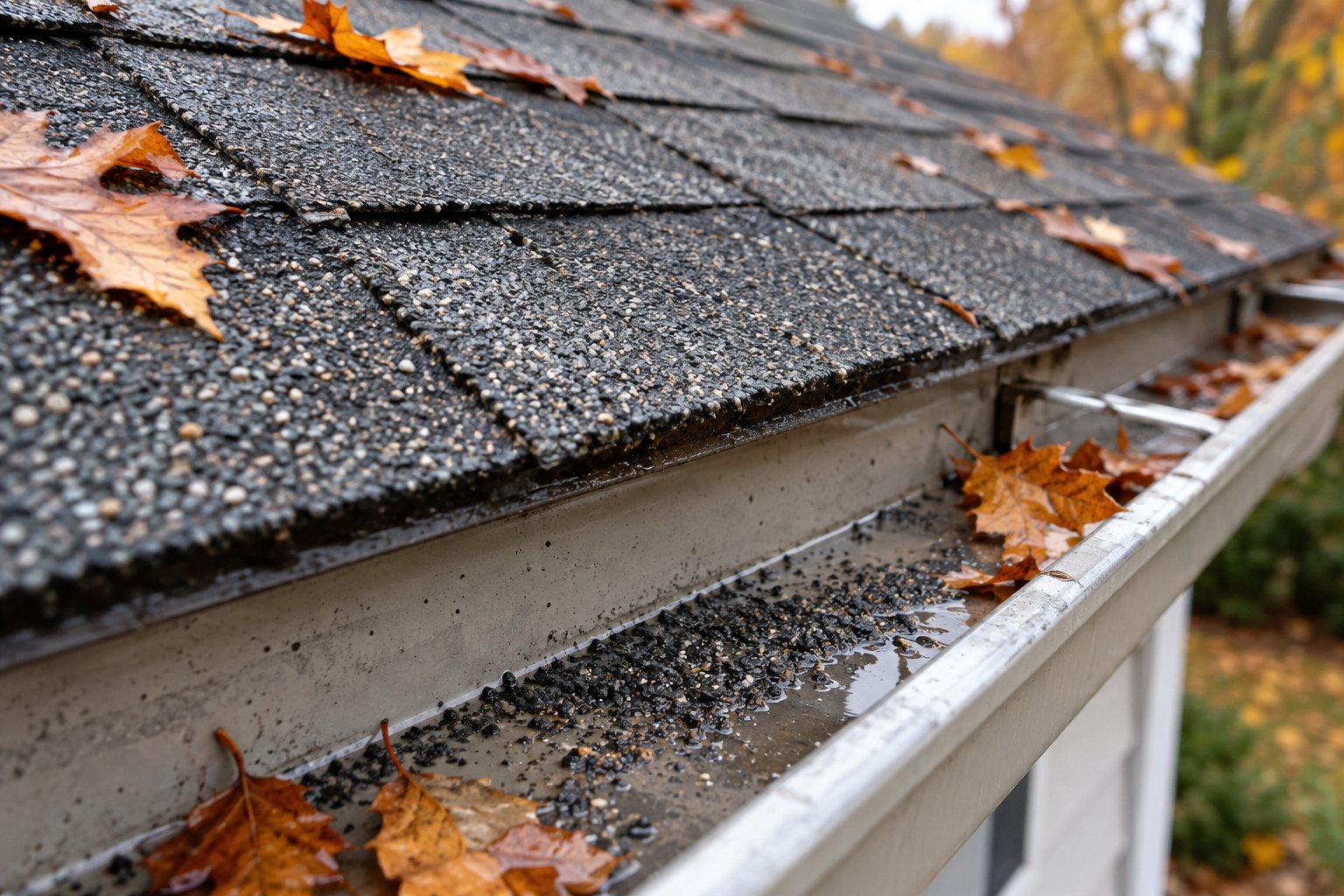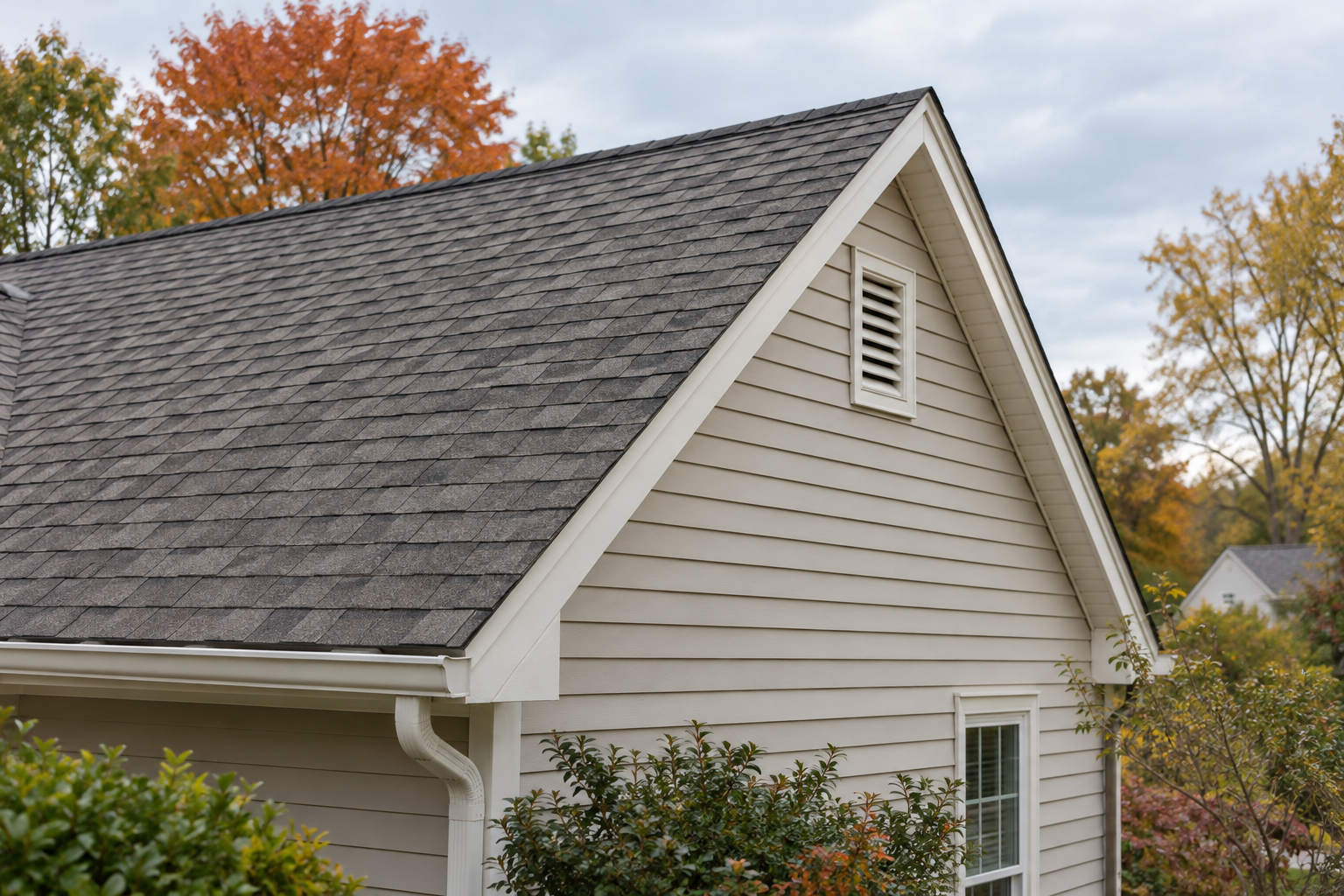

Roof Restoration Blog | Richmond VA & Central Virginia
What Hail Bruising Looks Like on Asphalt Shingles
After a hailstorm, homeowners often look for obvious damage: missing shingles, broken windows, or large dents. Asphalt-shingle hail damage, however, can be much more subtle.
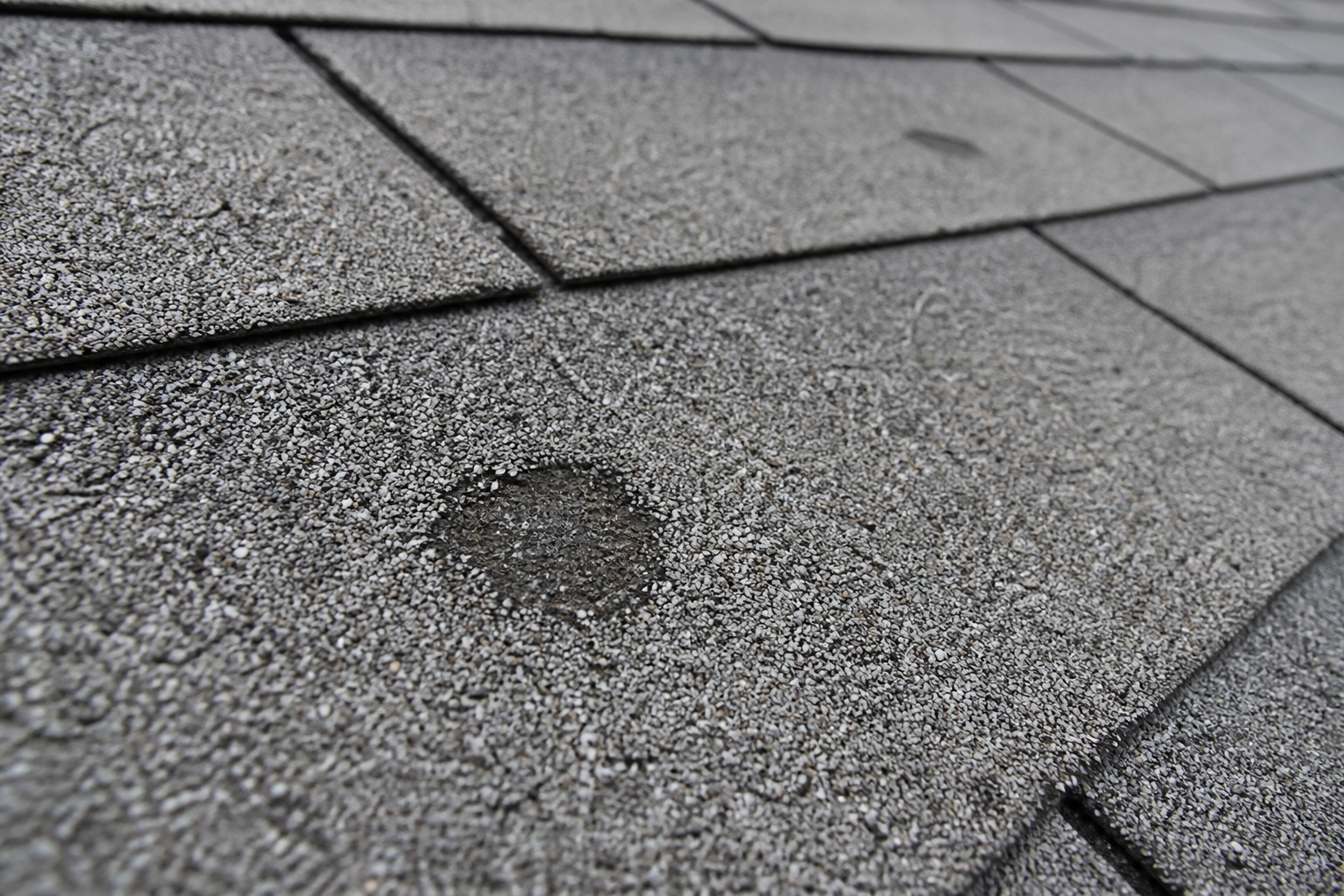
A hail bruise may look like a small dark mark or shallow divot. It may involve displaced granules, a depression in the asphalt layer, or a fracture that is difficult to see from the surface. Some bruises are identified partly by how the material feels—not only by how it looks.
Because roof access is hazardous and storm damage can be difficult to distinguish from ordinary aging, homeowners should inspect from the ground and leave close roof evaluation to a qualified professional.
What Is a Hail Bruise?
When hail strikes an asphalt shingle, the impact transfers energy through the protective granules and asphalt coating. Depending on the hailstone, wind, roof slope, shingle condition, and support beneath the impact point, the strike may:
- Dent or deform the shingle
- Displace protective surface granules
- Tear, crack, or rupture the shingle material
- Fracture the reinforcement beneath the visible surface
The Insurance Institute for Business & Home Safety groups asphalt-shingle hail damage into three broad modes: deformation, granule loss, and breach. A bruise generally refers to a localized impact area where the material has been compressed or fractured, even if the surface has not opened into an obvious hole.
Common Visual Signs of Hail Bruising
Hail damage does not create a perfectly uniform pattern. Individual marks may be round, irregular, dark, faint, or difficult to distinguish from the shingle’s normal texture.
Possible signs include:
A Small Round or Irregular Divot
A hailstone can leave a shallow depression in the shingle. The mark may be roughly circular, but real impacts do not always produce a clean circle.
A Darker Impact Area
If granules have been knocked away or pushed aside, the darker asphalt beneath them may become visible. GAF and Owens Corning both identify discoloration, dark spots, indentations, and missing granules as possible hail indicators.
Displaced or Missing Granules
Granules help shield the asphalt coating from ultraviolet light. An impact may loosen them immediately or cause them to release gradually. A localized bald area after a storm deserves attention, although granule loss can also occur through aging and other causes.
A Soft or Spongy Spot
Some bruised areas feel softer than the surrounding shingle. Roof Max’s hail-identification guidance describes bruises as localized soft areas that may release granules or begin to crumble when examined.
This is not a reason for a homeowner to press on shingles or walk the roof. A trained inspector can evaluate the surface using appropriate access and safety procedures.
A Hidden Fracture
The surface may appear mostly intact while the reinforcement underneath has split or fractured. Owens Corning notes that some hail-related splitting is visible only from the back of the shingle.
That is one reason a quick ground-level look cannot rule out damage.
Look for Collateral Clues Around the Property
Before focusing on the roof, check safer areas around the home for signs that hail struck with enough force to cause damage.
Possible collateral clues include:
- Dents in gutters and downspouts
- Marks on metal roof vents, flashing, or chimney caps
- Dents on air-conditioning equipment
- Damage to siding, shutters, screens, or outdoor furniture
- Vehicle dents
- Leaves or small branches stripped from plants and trees
Hail falls in irregular patterns. Damage to a neighbor’s property does not prove that your roof was hit, and an undamaged neighboring roof does not prove that yours was spared.
Not Every Dark Mark Is Hail Damage
Several roof conditions can resemble impact marks. Manufacturing variation, blisters, foot traffic, tool damage, algae, natural granule shedding, and long-term weathering may all create marks that look suspicious from a distance.
Real hail damage is typically evaluated by considering:
- The shape and distribution of the marks
- Whether granules were displaced at the impact point
- Whether the shingle material is dented, soft, cracked, or breached
- Whether collateral damage appears elsewhere on the property
- The roof’s age and condition before the storm
Diagnosis should not depend on one isolated spot.
What to Do After a Hailstorm
Start with a safe ground-level review:
- Photograph visible property damage without climbing onto the roof.
- Check gutters, downspouts, vents, siding, outdoor equipment, and vehicles.
- Look from the ground for missing shingles or obvious areas of disturbance.
- Note the storm date and retain any photographs or weather information.
- Arrange a professional roof inspection if you see damage or suspect a significant impact.
- Review your insurance policy and contact your insurer directly if you may need to report storm damage.
Avoid walking on the roof. In addition to the fall risk, foot traffic can disturb loose granules or worsen already damaged material.
Can Roof Max Treat Hail-Damaged Shingles?
Roof Max is a maintenance treatment for qualifying asphalt shingles. It is not a repair for hail fractures, punctures, damaged flashing, leaking areas, or compromised decking.
Storm damage must be identified and properly repaired first. Severely damaged roofs may need partial or complete replacement.
After necessary repairs are completed, a structurally sound asphalt roof may be evaluated separately to determine whether the remaining shingles qualify for rejuvenation. Eligibility depends on the roof’s actual condition—not simply its age or appearance from the ground.
Why Timely Inspection Matters in Central Virginia
Summer storms in Midlothian, Richmond, and surrounding Central Virginia communities can bring wind-driven hail and heavy rain. A damaged shingle may not leak immediately, but lost granules or hidden fractures can leave the material more vulnerable to additional weather exposure.
An inspection helps establish what happened, what needs repair, and whether the rest of the roof remains serviceable.
Request a Roof Assessment
If your Midlothian-area home has recently experienced hail, do not rely on a driveway view or assume every mark is storm damage.
Visit richmondroofrejuvenation.com to request a professional assessment. Roof Max can help determine whether repairs, replacement, or post-repair rejuvenation should be considered for your asphalt roof.