
Roof Restoration Blog | Richmond VA & Central Virginia
Why Roof Valleys Handle So Much Rainwater
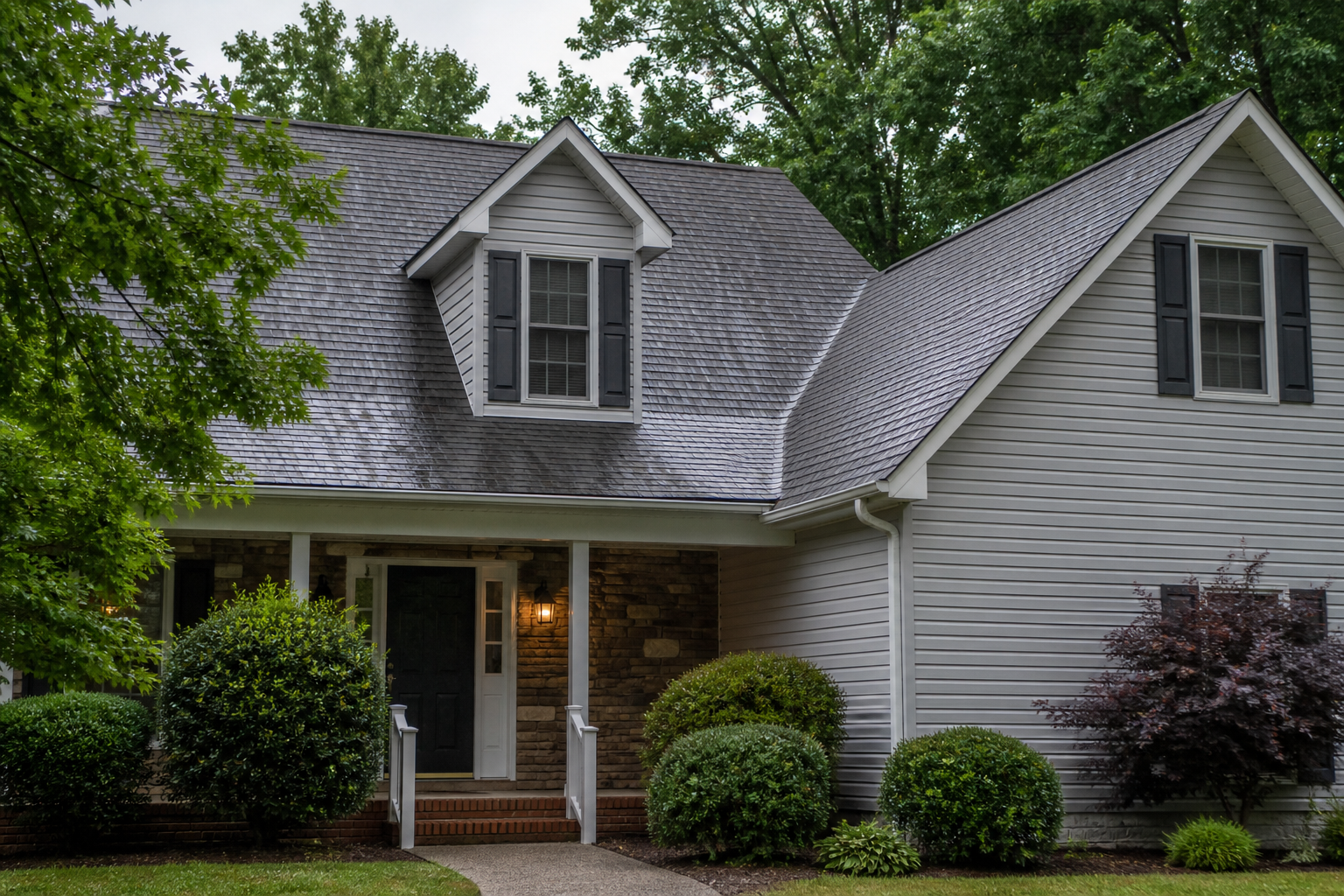
Look at a roof with intersecting slopes, and you will often see a line running down the inside angle where those slopes meet. That line is the roof valley. It may occupy only a small part of the roof, but it performs some of the roof system’s most demanding drainage work.
Water from two adjoining roof planes converges in the valley before moving toward the gutter. Because that runoff is concentrated into one path, valleys deserve careful installation, clear drainage, and regular professional attention.
What Is a Roof Valley?
A roof valley is the internal angle formed where two sloping roof sections intersect. Valleys commonly appear where a dormer meets the main roof or where two larger sections of a complex roof come together.
The National Roofing Contractors Association describes a valley as a runoff pathway that directs water from adjacent roof planes into a valley trough. The exact volume of water depends on factors such as the valley’s length, slope, and the size of the roof areas draining into it.
The basic idea is simple:
- Rain lands across two roof slopes
- Gravity moves the water downslope
- Both flows meet in the valley
- The valley directs the combined runoff toward the gutter
That is why a roof valley can handle more water than the surrounding shingle field during the same rain event.
Why Concentrated Water Flow Matters
Asphalt shingles are designed to shed water, but the valley is more than an ordinary shingle area. Water moving from adjoining slopes repeatedly follows the same narrow drainage path.
The valley must work together with underlayment, shingles, flashing, and the gutter system. If any part of that path is damaged, blocked, or installed incorrectly, water may be diverted where it does not belong.
This does not mean every valley is leaking or failing. It means the valley is a detail worth including in routine roof observations and professional assessments.
Open and Closed Roof Valleys
Homeowners may notice that roof valleys do not all look the same. Two broad categories are common.
Open Valleys
An open valley has a visible metal channel running down its center. Shingles are trimmed back on both sides so runoff can travel along the exposed flashing.
Closed Valleys
A closed valley is covered by shingles. Depending on the installation method, shingles from the adjoining roof planes may be cut along the valley or woven across it.
The correct materials and installation method depend on the roof design, shingle manufacturer’s instructions, local requirements, and other project-specific conditions. Homeowners should not try to determine installation quality from appearance alone.
Debris Can Interrupt the Drainage Path
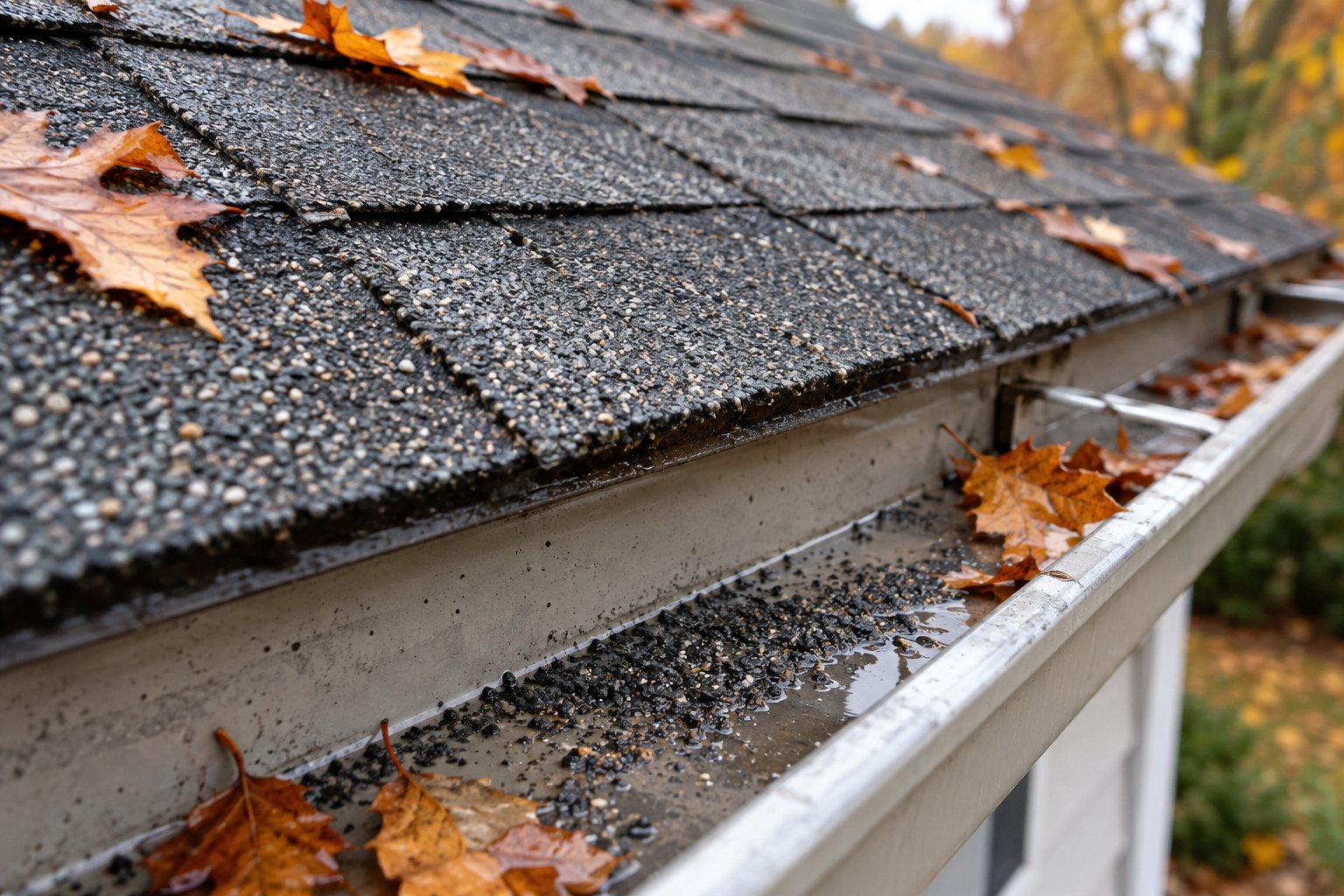
Roof valleys naturally form a low channel, so windblown leaves, twigs, seeds, and other debris may collect there. The National Roofing Contractors Association notes that valley configurations can be susceptible to debris accumulation.
Debris can slow runoff, keep the roof surface damp, or redirect water beneath nearby materials. Homes surrounded by mature trees may need more frequent observation, particularly after windy weather or when leaves are falling.
Do not climb onto the roof to clear or inspect a valley unless you are properly trained and equipped. Wet asphalt shingles are especially slippery. A roofing professional can examine and clean the area using appropriate safety practices.
What Homeowners Can Safely Watch For
Many visible changes can be noticed from the ground, through an upper-story window, or with binoculars. After a storm, look for:
- Leaves or branches visibly resting in the valley
- Shingles that appear lifted, cracked, displaced, or missing
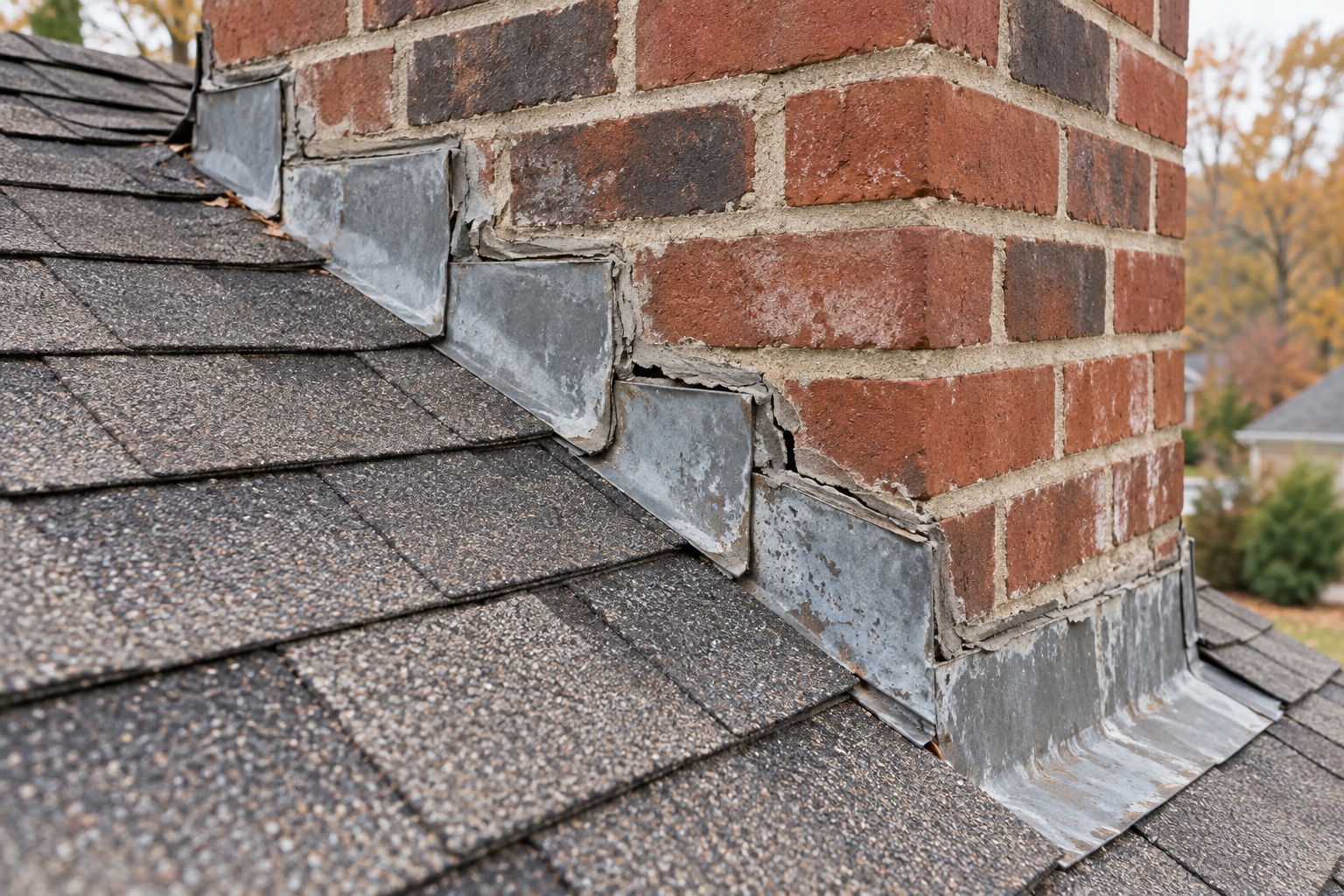
- Bent, loose, corroded, or visibly damaged flashing
- Water spilling over the gutter near the end of the valley
- An uneven drainage pattern that appears different from neighboring roof areas
- Water stains on an interior ceiling or wall after rain
An interior stain does not identify the exact entry point by itself. Water can travel before it becomes visible indoors, so a professional evaluation is needed to determine the source.
Why Flashing and Underlayment Matter
The visible shingles are only part of a valley assembly. Proper underlayment creates a protective base, while flashing and carefully placed shingles help guide water down the intended path.
Because installation details vary, repairs should follow the roofing manufacturer’s instructions and applicable building requirements. Driving an extra nail, applying an unapproved sealant, or covering the valley with a surface coating can create additional problems instead of solving the original one.
Roof Maxx treatment is not a leak sealant and should not be used to cover unresolved valley problems. Maintenance and repair needs must be identified and addressed separately.
How a Roof Maxx Assessment Fits In
Roof Maxx begins with an assessment of the asphalt-shingle roof’s current condition. The evaluation considers the shingles and visible roof-system details, including vulnerable areas that may require maintenance before a roof can qualify for treatment.
If the roof is a suitable candidate, recommended tune-up work may be completed before the Roof Maxx application. If the valley or another part of the roof needs a different repair, the assessment helps clarify that need rather than hiding it.
Every roof is different. A roof’s age alone cannot determine whether it needs maintenance, repair, treatment, or replacement.
Roof-Valley Awareness in Central Virginia
Midlothian, Richmond, and Central Virginia homes experience rain throughout the year, along with seasonal leaves, pollen, twigs, and storm debris. Roof design and nearby tree cover affect how much material may reach a valley and how readily it drains.
A sensible maintenance routine includes safe ground-level observation, attention after severe weather, and professional assessment when something looks different or water is appearing indoors.
Start With a Clear View of the Whole Roof
Roof valleys may be narrow, but they carry runoff from multiple roof surfaces. Keeping that path clear and maintaining the surrounding shingles, flashing, and gutters helps the roof shed water as designed.
If you have questions about an aging asphalt-shingle roof in Midlothian, Richmond, or Central Virginia, visit richmondroofrejuvenation.com to request a Roof Maxx assessment.