
Roof Restoration Blog | Richmond VA & Central Virginia
Hail Bruises on Asphalt Shingles: What Homeowners Should Know
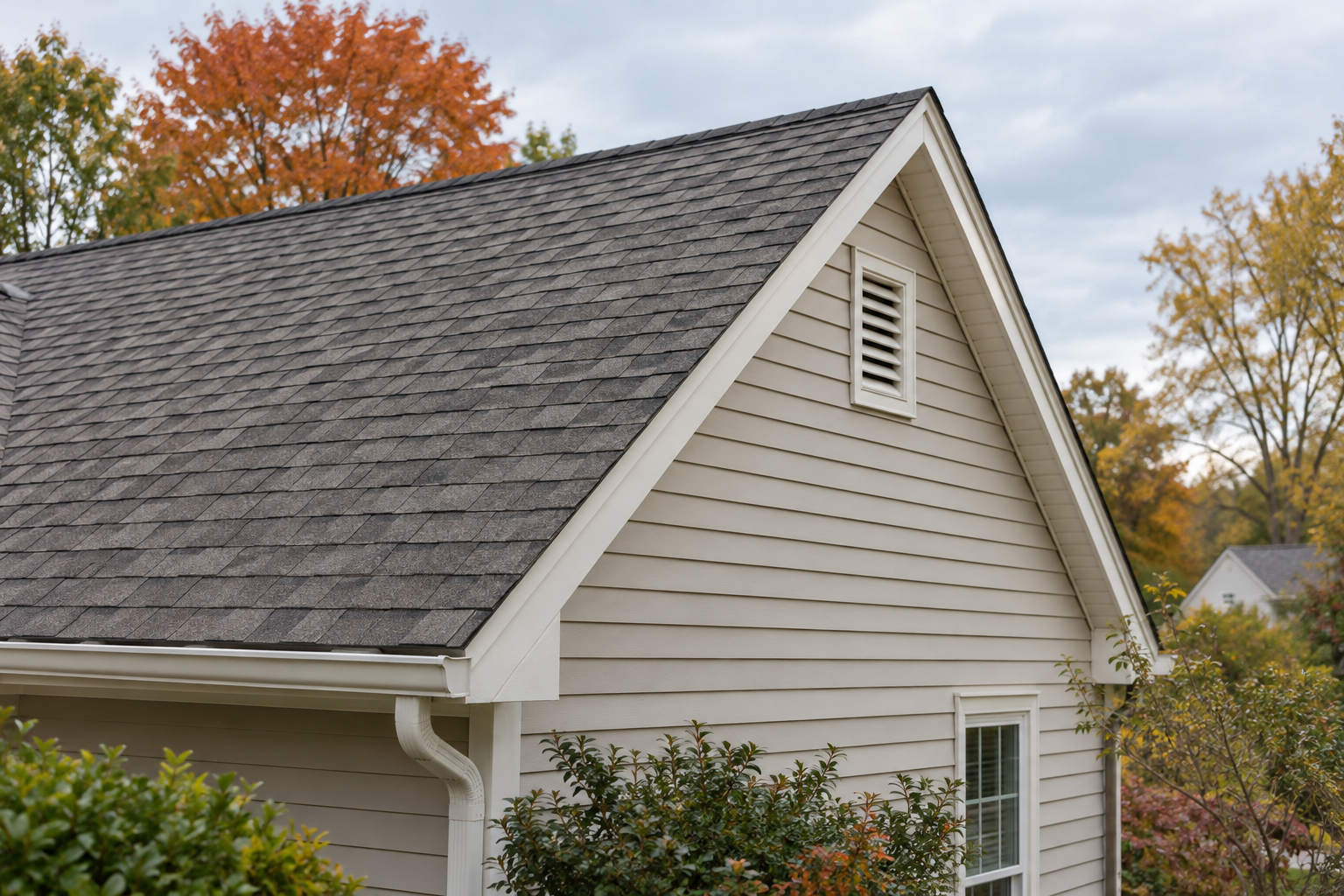
After a hailstorm, homeowners often expect roof damage to look dramatic: cracked shingles, open holes, or large sections of missing material. Asphalt-shingle damage can be less obvious.
A hail impact may leave a shallow dent, displaced granules, or a localized soft area commonly called a bruise. The reinforcing mat inside the shingle can be strained or fractured even when there is no obvious crack visible on the top surface.
That does not mean every circular mark is hail damage. Weathering, foot traffic, manufacturing conditions, tree contact, blisters, exposed fasteners, and ordinary granule loss can create marks that resemble impact damage. A reliable conclusion requires more than shape alone.
For homeowners in Midlothian, Richmond, and surrounding Central Virginia communities, the practical lesson is simple: document the storm, stay off the roof, and arrange a qualified inspection when damage is suspected.
What Is a Hail Bruise?
An asphalt shingle is a layered roofing product. Its reinforcing mat provides much of its strength, while asphalt and mineral granules help protect the material and shed water.
When a hailstone strikes, the shingle can flex against the roof deck. If the impact is forceful enough, the reinforcing mat may be fractured or substantially strained. Inspectors often call the resulting localized soft spot a bruise because it can feel somewhat like a bruise in an apple.
The word “bruise” should not be interpreted as harmless discoloration. In roofing terminology, it can describe physical damage within the shingle. The affected area may not display a clear top-side crack, even though the internal reinforcement has been compromised.
Possible impact effects include:
- A localized indentation or soft spot
- Displaced or missing surface granules
- Exposed asphalt coating
- A tear, rupture, or fracture in the shingle mat
- A puncture in a severe impact
- Damage near an edge, joint, or unsupported area
The appearance varies with hailstone size and hardness, wind, impact angle, roof slope, shingle type, shingle age, and the support beneath the impact point.
Why a Round Mark Is Not Proof of Hail Damage
Hailstones are generally rounded, so hail effects may appear round or oval. That visual clue can help an inspector locate areas that deserve closer attention, but it is not conclusive by itself.
Asphalt shingles accumulate marks throughout their service life. Granules can be lost through normal weathering. Foot traffic can scuff the surface. Tree branches can scrape shingles. Blisters can break open. Installation or maintenance activities can leave mechanical marks.
A qualified assessment considers the pattern and distribution of marks, not just one spot. It may also compare the roof with other exposed surfaces around the property, such as metal vents, gutters, downspouts, screens, siding, or outdoor equipment. Supporting evidence can help establish whether hail reached the property and how it traveled.
Homeowners should be cautious when anyone declares that every round mark is storm damage—or dismisses every mark as ordinary aging—without a careful inspection.
Bruises and Visible Cracks Are Not the Same Thing
A visible crack is a clear break that can be seen on the exposed surface. A bruise may involve damage that begins lower in the shingle and is not immediately obvious from above.
This distinction explains why a roof can look mostly normal from the yard after a storm yet still warrant evaluation. It also explains why a distant photograph cannot always confirm or rule out damage.
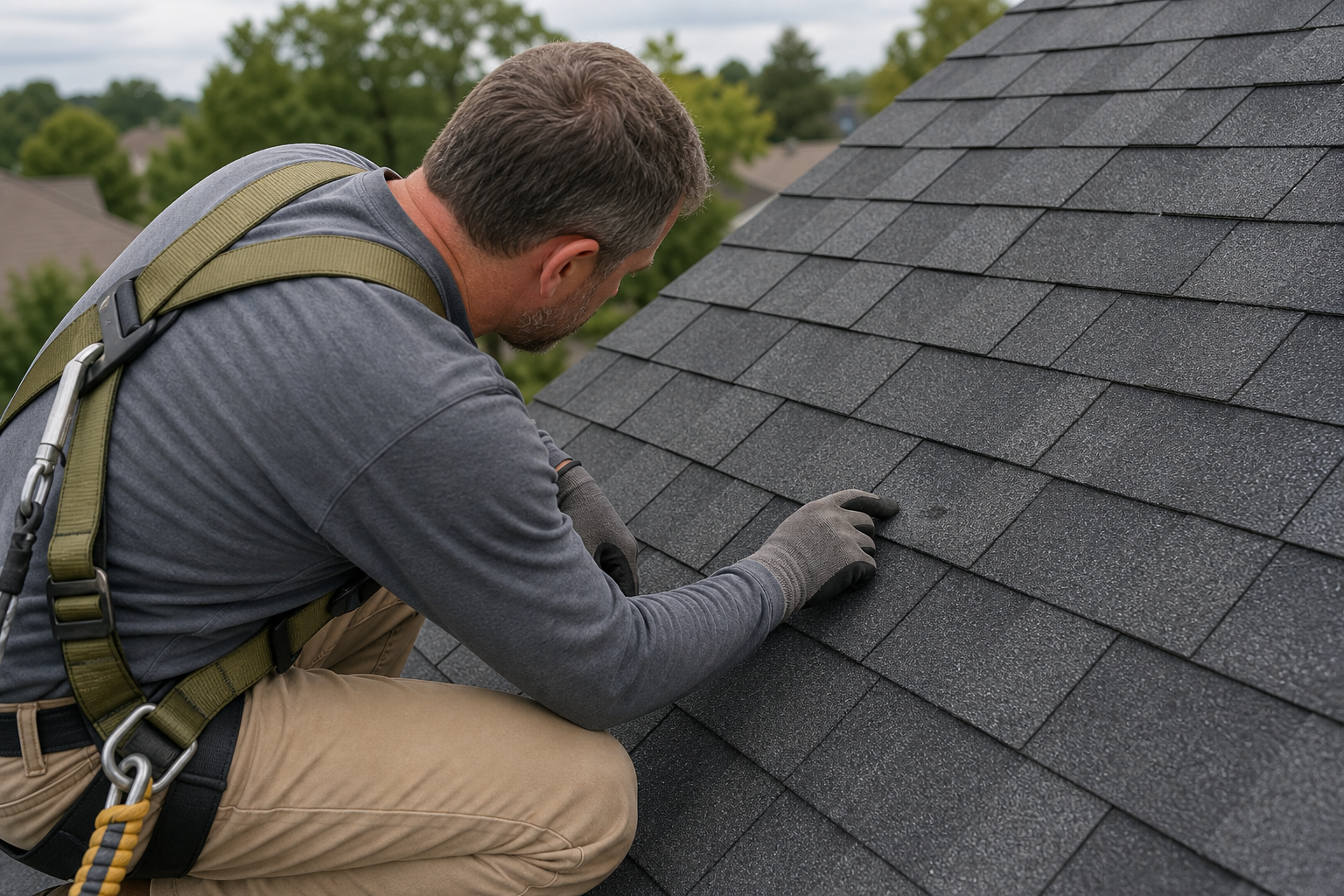
At the same time, the absence of a visible crack does not automatically mean a bruise exists. Tactile examination and close inspection belong in the hands of qualified professionals using appropriate fall protection and inspection methods.
Granule Loss Requires Context
Mineral granules protect the asphalt coating from sunlight and weathering. Hail can displace granules, but hail is not the only cause of granule loss.
During an inspection, the significance of granule loss depends on factors such as:
- Whether the loss is fresh or weathered
- Whether underlying asphalt or reinforcement is exposed
- Whether the marks follow a credible impact pattern
- Whether similar marks appear throughout the roof
- Whether other property surfaces show recent hail effects
- The age and overall condition of the shingles
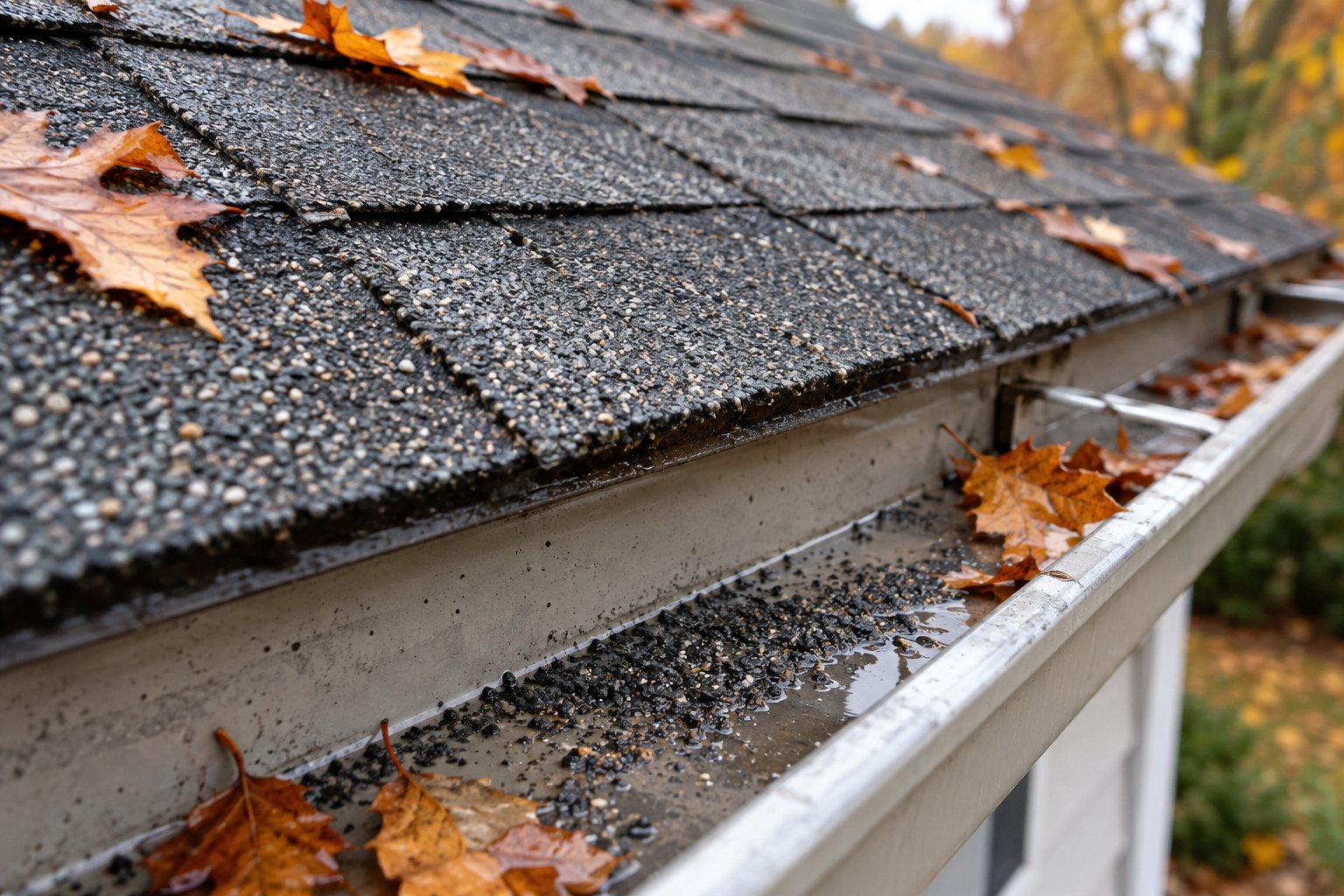
Loose granules in gutters do not automatically establish a hail claim. Some granule shedding occurs as shingles age, and newer shingles can release excess granules. The complete roof condition matters more than one isolated sign.
What Homeowners Should Do After a Hailstorm
Safety comes first. A wet, steep, or damaged roof is not the place for a homeowner to investigate impact marks.
From the ground, you can:
- Record the date and approximate time of the storm.
- Photograph visible hailstones beside a ruler or familiar object when it is safe to do so.
- Photograph visible exterior conditions and debris without climbing.
- Look for obvious damage to gutters, downspouts, screens, siding, outdoor furniture, or vehicles.
- Check ceilings and attic areas for new moisture signs without disturbing wet electrical areas.
- Arrange a qualified inspection if you notice leaks, missing shingles, damaged exterior surfaces, or other concerns.
Keep all photographs, inspection reports, repair recommendations, invoices, and insurance correspondence together. Clear records help homeowners compare findings and avoid confusion later.
Avoid Rushed Conclusions and Unnecessary Repairs
Storms can create urgency, but a responsible decision still depends on evidence.
Ask the inspector to explain:
- Which roof areas were examined
- What conditions were observed
- Why those conditions are or are not consistent with hail
- Whether the concern is cosmetic, functional, or unrelated to the storm
- Whether immediate temporary protection is needed
- Which repairs are necessary and why
- Whether further evaluation by a roofing consultant, contractor, or insurance professional is appropriate
A photograph with circles drawn around marks is not a complete diagnosis. The explanation should connect the observed condition to the roof’s ability to shed water or its expected service life.
Where Roof Max Fits—and Where It Does Not
Roof Max is intended for qualifying, serviceable asphalt shingles that have lost flexibility through normal aging. A roof assessment determines whether the existing shingles are appropriate for treatment.
Roof Max is not a hail-damage repair. Treatment does not correct:
- Fractured or punctured shingles
- Active leaks
- Failed flashing
- Rotten decking
- Structural damage
- Missing or severely damaged shingles
- Widespread roof failure
Necessary storm repairs must be addressed before any rejuvenation treatment is considered. A roof with significant hail damage may require repair or replacement rather than treatment.
Roof Max’s written warranty covers treated-shingle flexibility and serviceable condition under its terms. It does not serve as insurance against hail, wind, ice, snow, leaks, granule loss, or faulty installation. Homeowners should review the current written warranty and their property-insurance policy rather than assuming one replaces the other.
When to Request an Inspection
Consider arranging a qualified inspection when:
- Hail in the area was large or wind-driven
- Gutters, vents, screens, siding, or vehicles show impact damage
- Shingles are missing, lifted, punctured, or visibly disturbed
- A new leak or ceiling stain appears
- The roof was already older or weathered before the storm
- You are unsure whether visible marks are new
- A contractor, insurer, buyer, or property manager needs documented findings
Prompt evaluation does not mean assuming the entire roof is damaged. It means establishing the roof’s actual condition so the next decision is based on evidence.
A Careful Roof Assessment in Central Virginia
Hail effects on asphalt shingles are more complicated than “round mark equals damage.” A bruise may exist without an obvious top-side crack, while a circular area of granule loss may have a completely different cause.
Homeowners in Midlothian, Richmond, Chesterfield, Henrico, and surrounding Central Virginia communities should use a qualified inspection to separate storm-related concerns from ordinary aging and maintenance conditions.
Roof Max of Midlothian can assess whether an asphalt roof remains serviceable and whether Roof Max may be appropriate after necessary damage and repairs have been addressed.
To request an assessment, visit richmondroofrejuvenation.com.