
Roof Restoration Blog | Richmond VA & Central Virginia
Roof Health and Home Efficiency: How the Pieces Work Together
A roof is part of the system that separates your living space from heat, cold, rain, wind, and humidity. Its condition matters for durability and weather protection. However, the roof covering is only one part of the much larger home-performance picture.
When an upstairs room feels hot, a utility bill rises, or an attic develops moisture, homeowners may assume the roof is the single cause. In reality, asphalt shingles, flashing, attic air sealing, insulation, ventilation, ductwork, and HVAC equipment perform different jobs.
Understanding those roles helps homeowners in Midlothian, Richmond, and surrounding Central Virginia communities choose the right assessment and avoid expecting one product to solve an unrelated problem.
What Roof Health Means
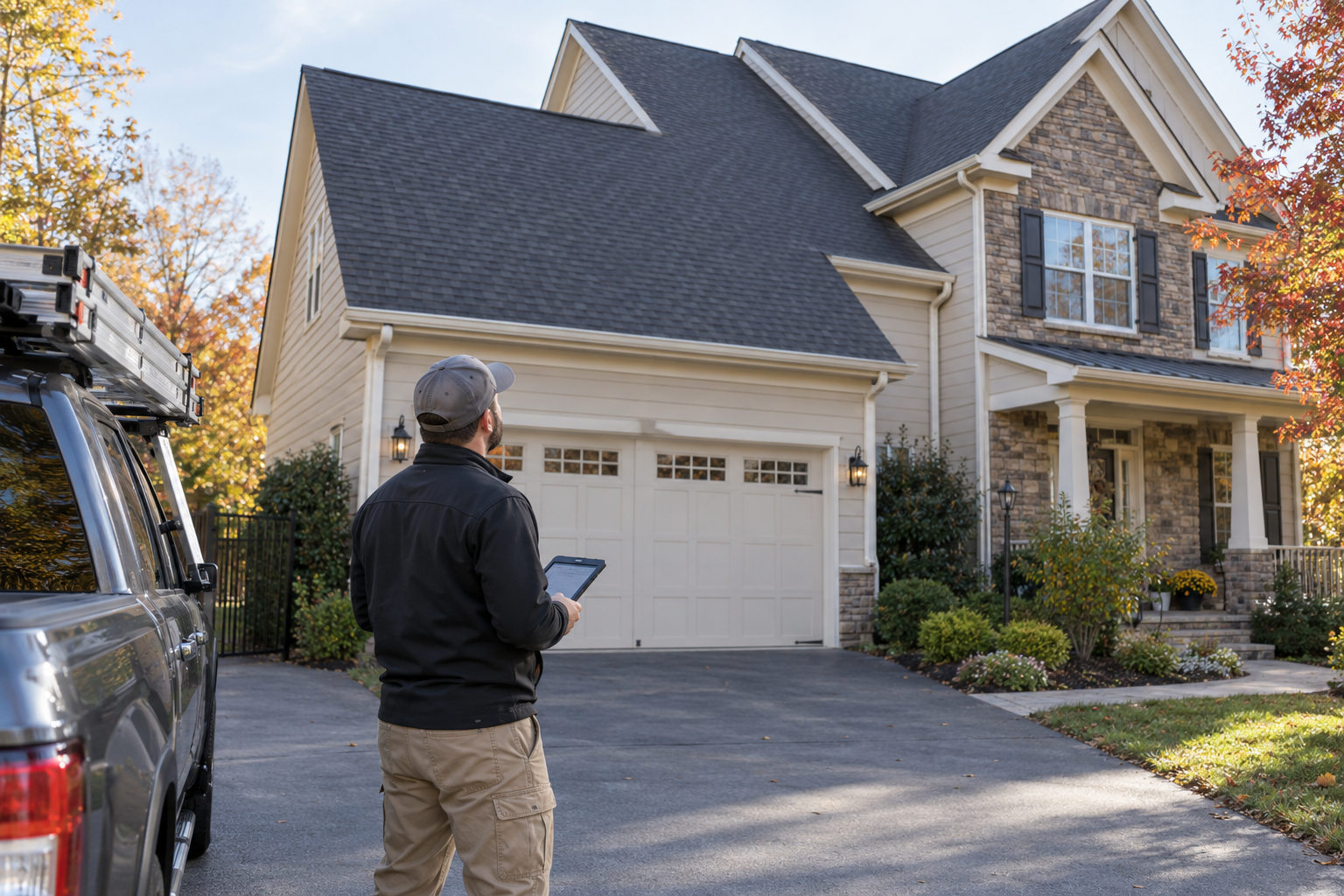
Roof health begins with the roof assembly’s ability to shed water and protect the structure beneath it. A professional roof assessment may examine:
- Asphalt-shingle condition and flexibility
- Missing, lifted, cracked, or curled shingles
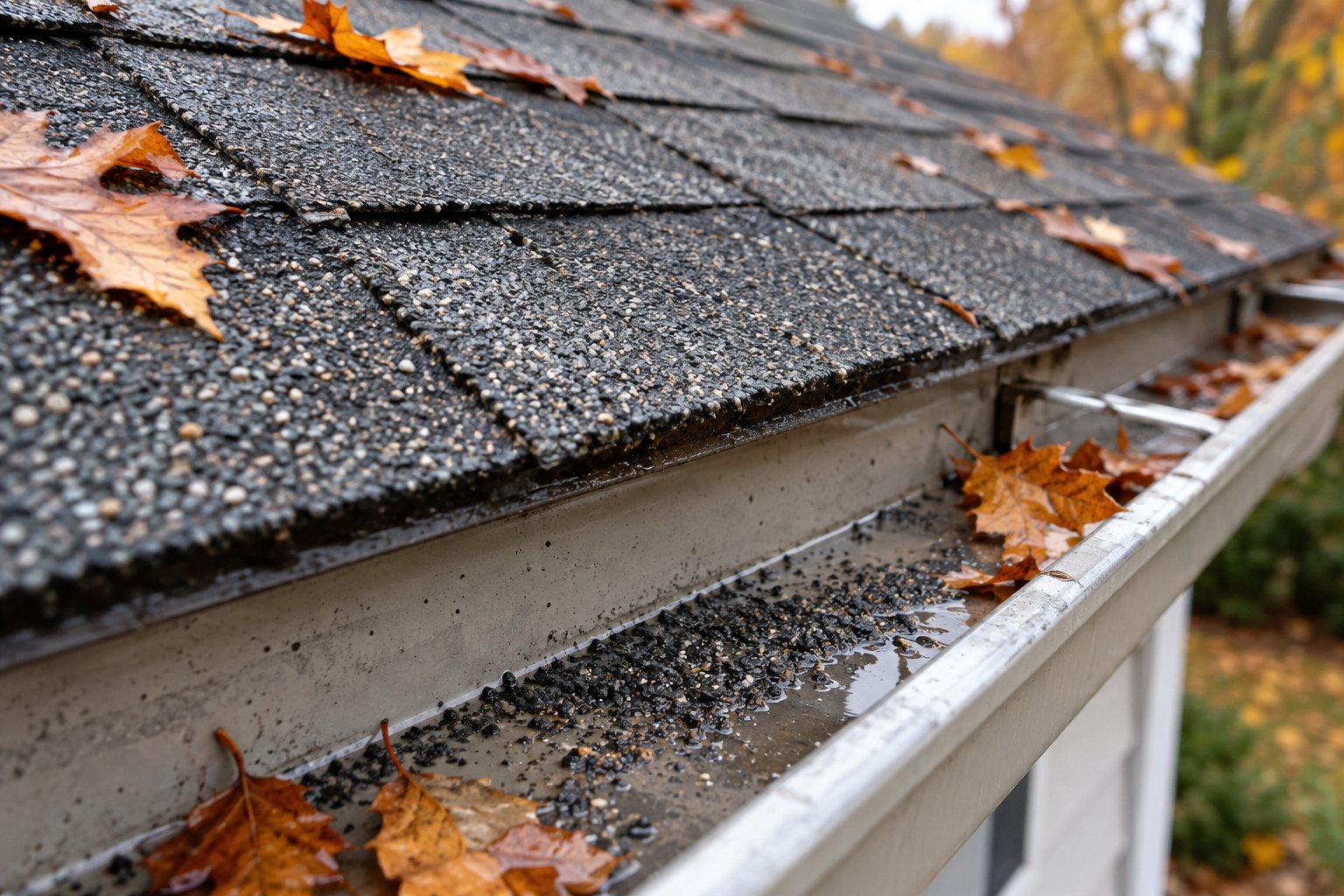
- Granule-loss patterns
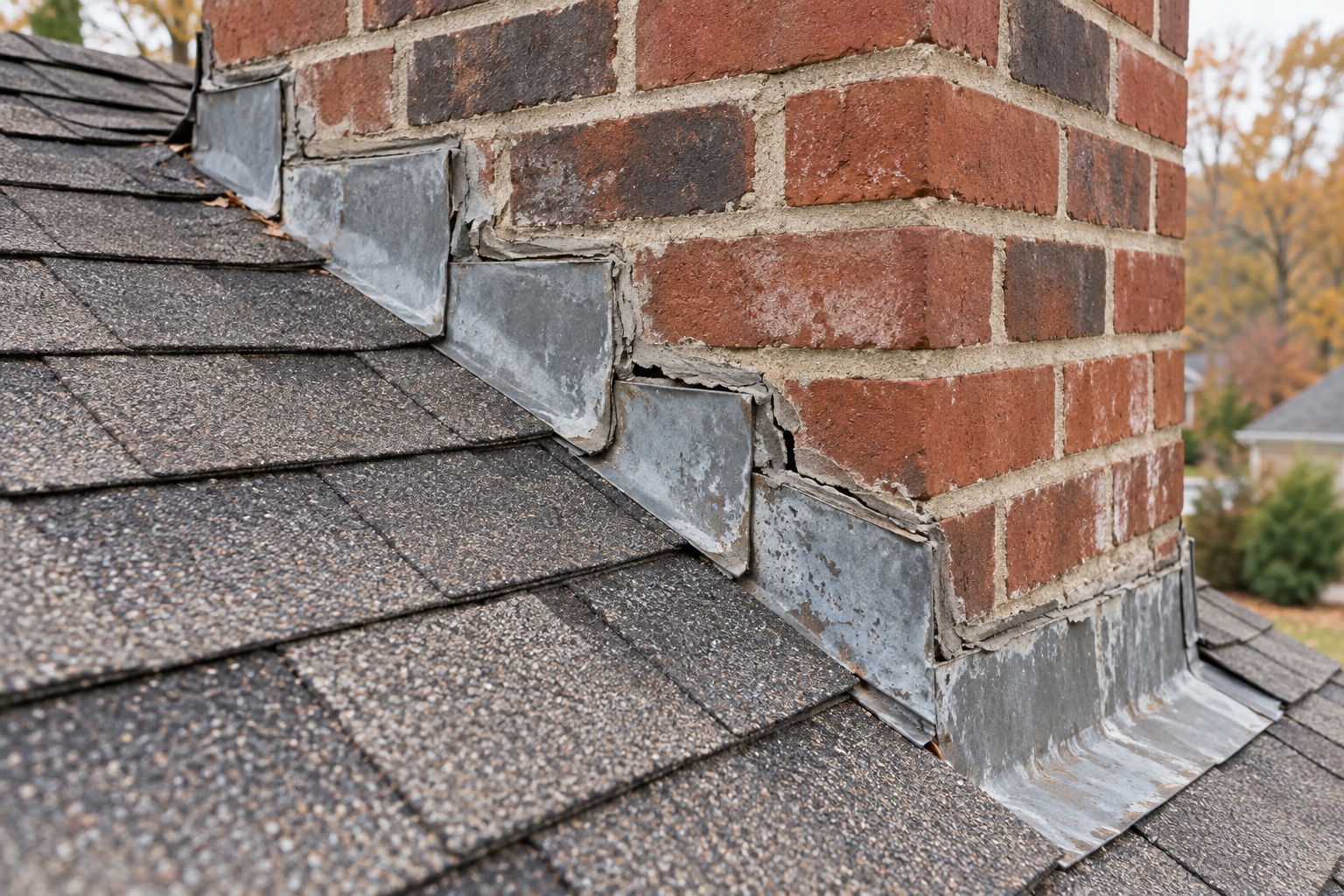
- Flashing around chimneys, walls, valleys, skylights, and vents
- Pipe boots and other penetrations
- Gutters, downspouts, fascia, and soffits
- Visible signs of leaks or damaged decking
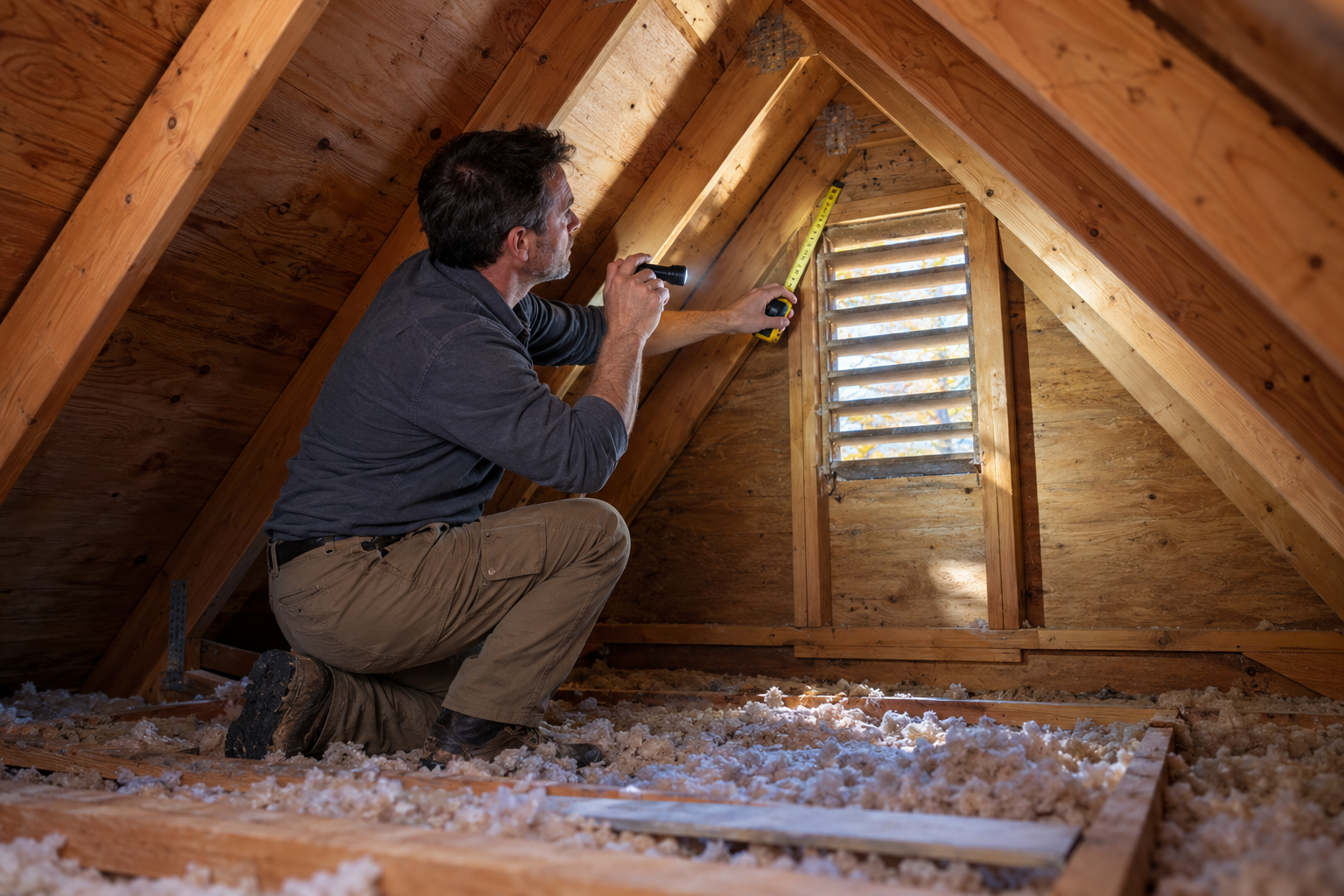
- Attic evidence of moisture or daylight
These conditions can affect durability, water management, and the remaining serviceability of the roof. They do not, by themselves, determine how efficiently the entire home uses energy.
What Home Efficiency Means
Home efficiency describes how effectively a house maintains comfortable conditions while limiting unnecessary energy use. The result depends on several interacting systems, including:
- The air barrier that limits uncontrolled air leakage
- Insulation that slows heat transfer
- Windows and doors
- Heating and cooling equipment
- Duct location, sealing, and insulation
- Appliances, lighting, and occupant behavior
- Solar exposure and shade
- Moisture control and ventilation strategy
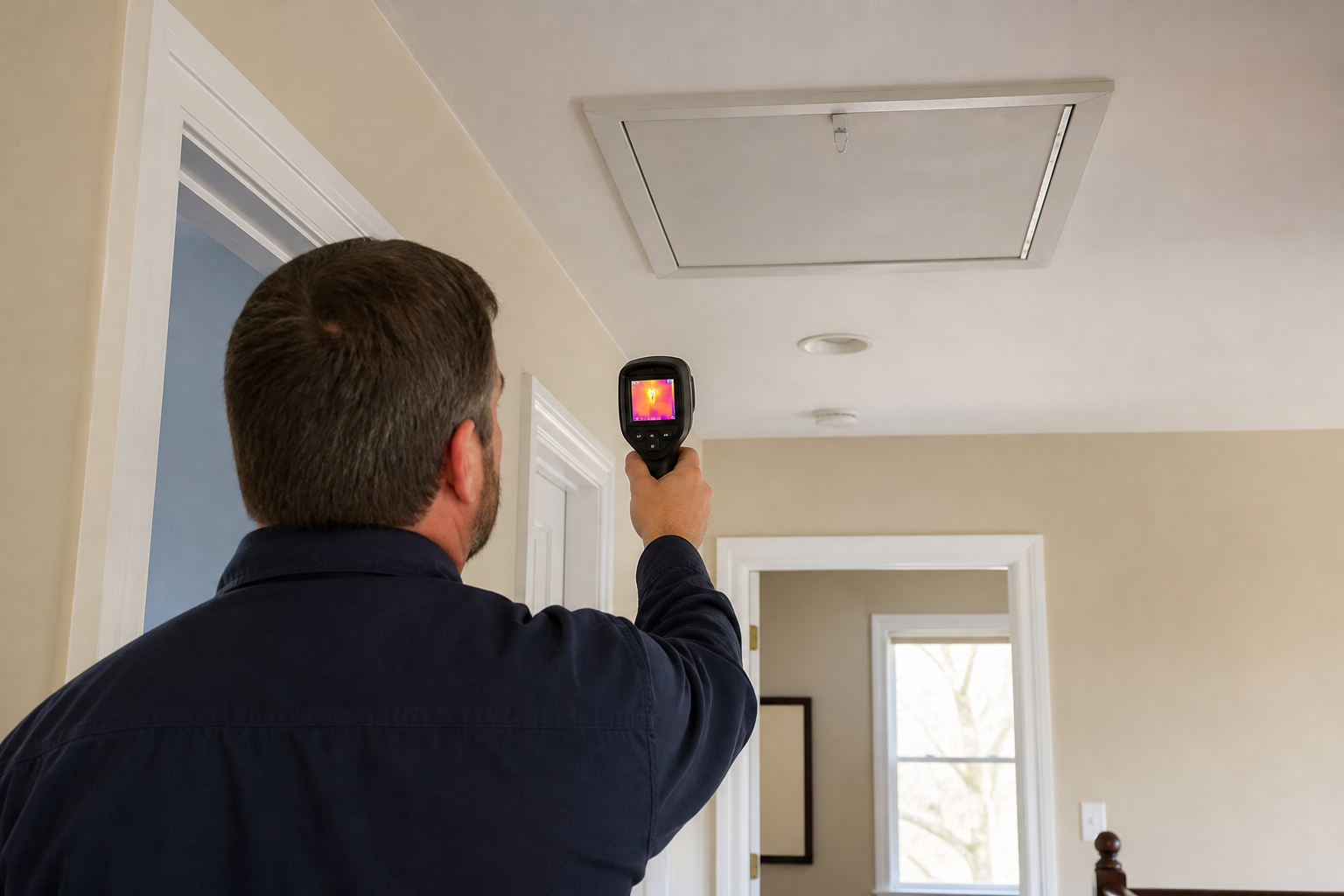
Because these variables interact, a high utility bill or uncomfortable room does not identify a single cause. A comprehensive home-energy assessment may use visual inspection, diagnostic testing, thermal imaging, utility history, and equipment evaluation to identify the most useful improvements.
How Heat Reaches the Attic and Living Space
During a sunny Central Virginia summer, the roof surface absorbs solar energy and becomes warmer than the outdoor air. Some heat moves through the roof deck toward the attic.
In a vented attic, outdoor air enters through intake vents and exits through exhaust vents. Insulation slows heat transfer between the attic and the conditioned rooms below. Air sealing limits uncontrolled movement through gaps in the ceiling plane. Ductwork and mechanical equipment in the attic can add another layer of complexity.
The amount of heat that reaches a room depends on factors such as:
- Roof color, orientation, slope, and shade
- Outdoor temperature and solar intensity
- Attic ventilation design
- Insulation level and coverage
- Air leakage through ceiling penetrations
- Duct leakage or inadequate duct insulation
- HVAC sizing, operation, and maintenance
This is why roof treatment alone should not be presented as a solution for attic temperature, room comfort, or cooling costs.
The Roof Covering Has a Specific Job
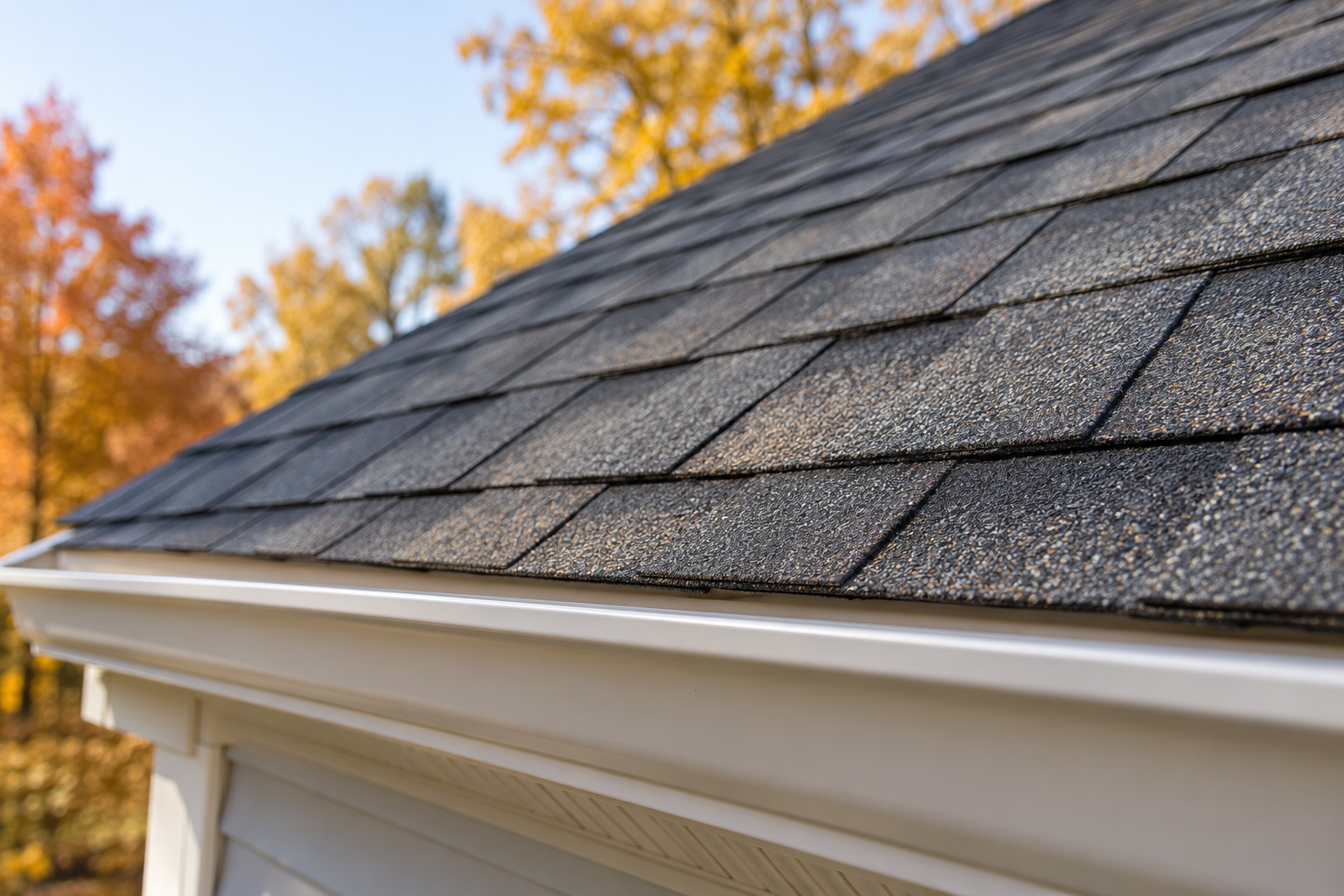
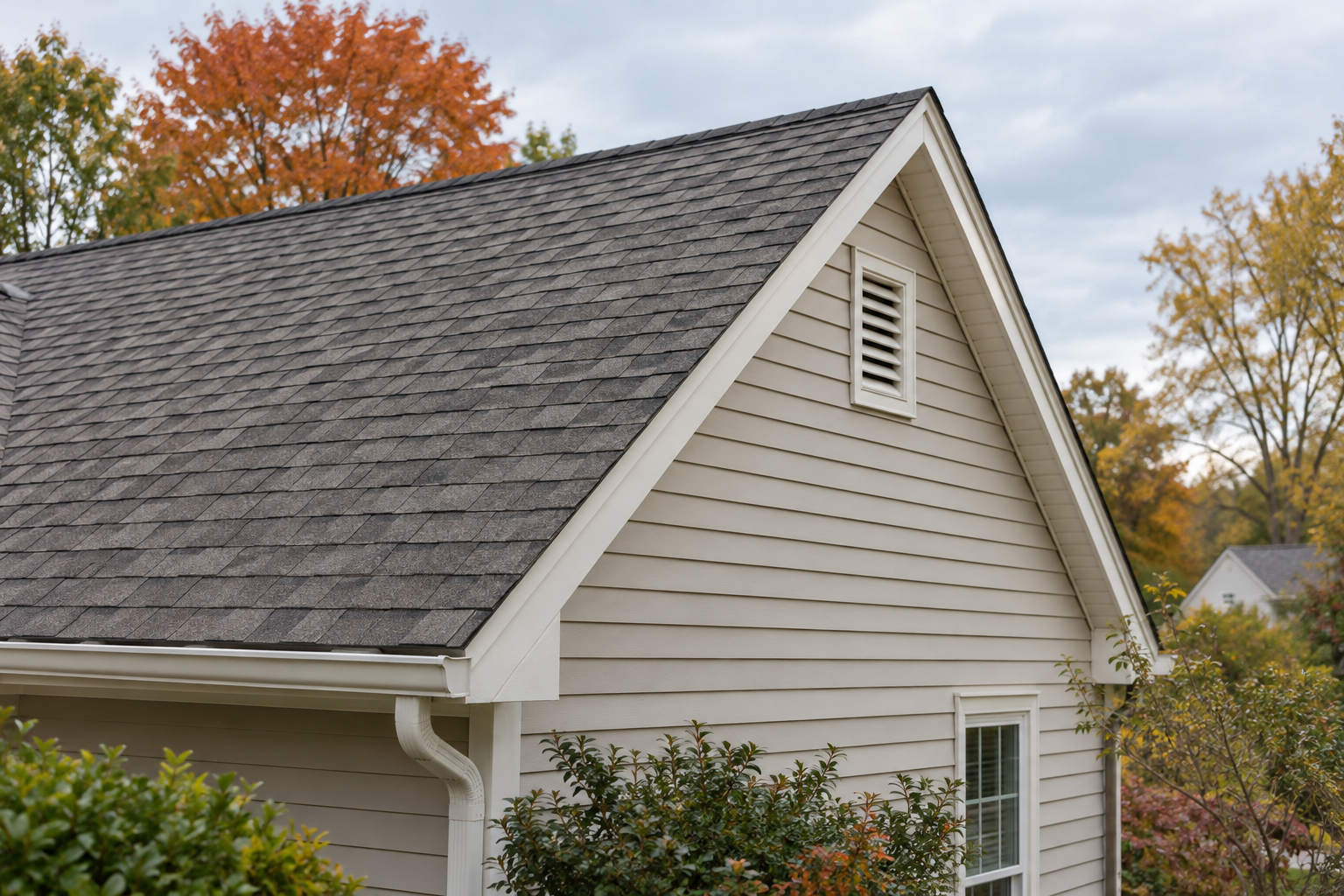
Asphalt shingles form the primary exterior roof covering on many homes. They are designed to shed water and withstand ordinary weather exposure when properly installed and maintained.
Over time, sunlight, heat, oxidation, and weathering contribute to the loss of oils that help asphalt remain flexible. Aging shingles may become dry or brittle and show curling, cracking, splitting, or accelerated granule loss.
Maintaining a serviceable roof covering supports the durability of the home. However, shingles do not replace attic insulation, seal gaps in the ceiling, repair leaking ducts, or tune HVAC equipment.
Air Sealing Controls Unwanted Air Movement
Air sealing addresses openings between conditioned rooms and unconditioned spaces such as a vented attic.
Common attic-leakage locations include:
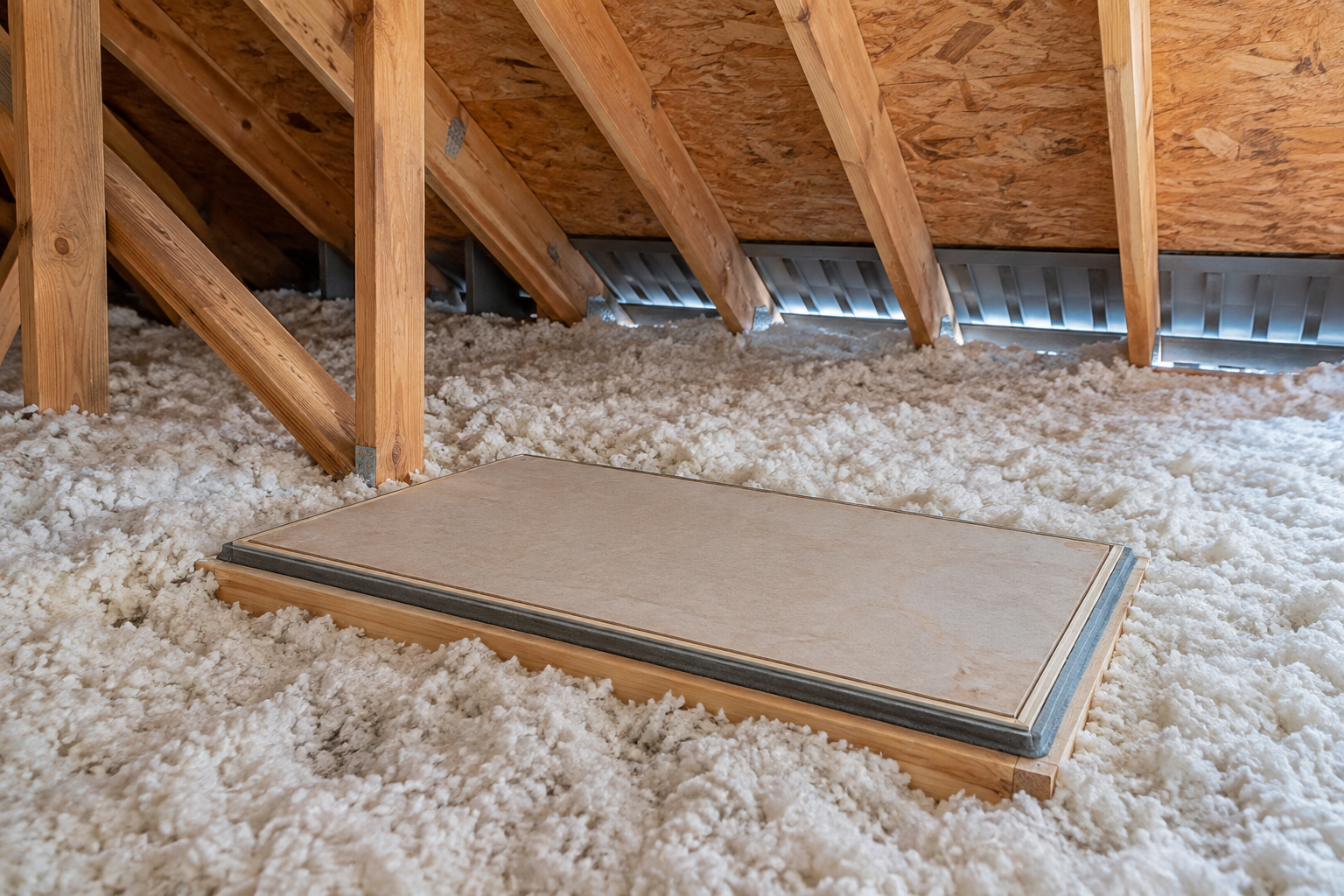
- Attic access hatches and pull-down stairs
- Plumbing and electrical penetrations
- Dropped soffits and open chases
- Gaps around partition walls
- Exhaust-fan housings
- Recessed fixtures
- Duct penetrations
ENERGY STAR recommends addressing attic air leaks before adding insulation. Insulation can slow heat transfer, but it does not reliably stop air movement through gaps.
Air-sealing work must account for electrical clearances, combustion safety, ventilation, and hot flues. Complex conditions should be handled by qualified professionals.
Insulation Slows Heat Transfer
Insulation helps resist heat flow between the attic and the living space. Its performance depends on more than the nominal depth.
Effective insulation should be:
- Continuous across the ceiling plane
- Evenly distributed
- Dry and free of contamination
- Not compressed or displaced
- Properly detailed around attic hatches
- Kept from blocking soffit vents
- Installed with required safety clearances
Thin areas, gaps, compression, and wind washing near the eaves can reduce performance. Adding new material over an attic without first checking moisture and air leakage may conceal problems rather than solve them.
Ventilation Supports a Properly Designed Attic
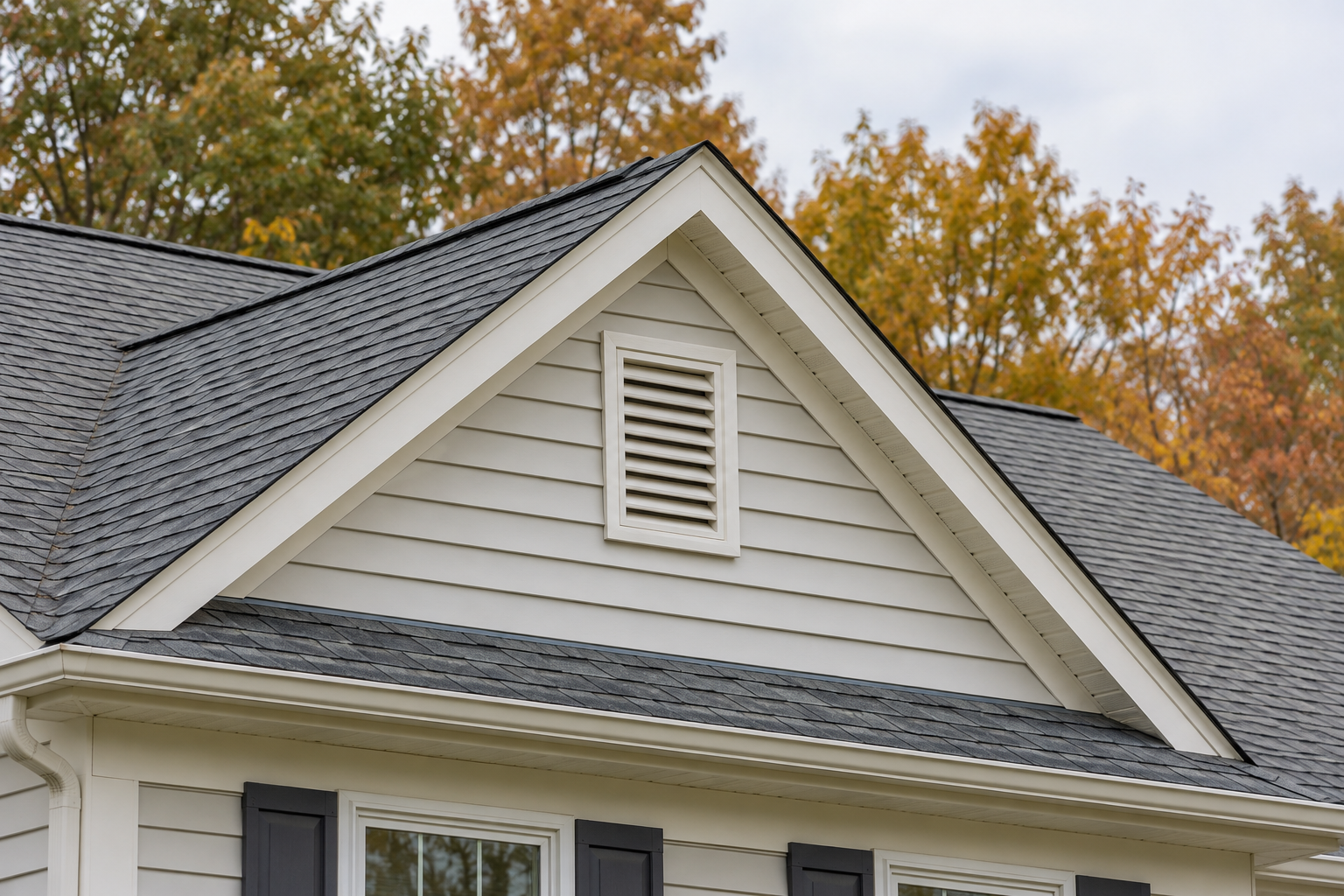
In a conventionally vented attic, intake vents near the eaves and exhaust vents near the ridge or roof peak allow outdoor air to move through the space.
Ventilation can help move heat and moisture out of a vented attic, but more ventilation is not automatically better. Intake and exhaust must be designed to work together, and soffit vents should remain unobstructed.
Unvented or conditioned attics use a different building strategy. Homeowners should not add fans, vents, or openings without understanding the existing assembly. Changes can affect pressure, moisture, comfort, and combustion safety.
Ductwork and HVAC Performance Matter Too
Heating and cooling equipment is responsible for conditioning the living space. If ducts run through a hot attic, leakage or poor duct insulation can reduce system performance.
Comfort concerns may also relate to:
- Dirty filters or restricted airflow
- Leaking supply or return ducts
- Unbalanced rooms
- Inadequate equipment maintenance
- Improper equipment sizing
- Thermostat placement
- Solar gain through windows
- Internal moisture loads
A roofing professional is not automatically the right person to diagnose these conditions. An HVAC contractor, home-energy professional, insulation contractor, or building-performance specialist may be needed.
Where Roof Max Fits
Roof Max is designed to restore flexibility in qualifying, serviceable asphalt shingles by replenishing oils lost through aging.
Its role is limited to the asphalt-shingle roof covering. Roof Max does not:
- Add attic insulation
- Seal ceiling or attic air leaks
- Modify attic ventilation
- Repair ductwork or HVAC equipment
- Replace failed flashing or active leak repairs
- Change the roof into a reflective cool-roof system
- Guarantee a particular attic temperature
- Guarantee lower energy bills
This distinction protects homeowners from misleading expectations. A Roof Max assessment should determine whether the shingles are suitable for treatment and identify repairs that must be completed separately.
A Better Way to Investigate Comfort or Energy Concerns
Start by defining the problem as clearly as possible.
If the Concern Is the Roof
Request a roof assessment when you notice missing shingles, curling, cracking, granule loss, damaged flashing, staining after rain, or other visible roof symptoms.
If the Concern Is Room Comfort
Document which rooms feel uncomfortable, the time of day, the weather, thermostat settings, and whether the HVAC system runs continuously.
If the Concern Is Energy Use
Compare utility bills with the same months in prior years while accounting for rate changes and weather. A home-energy assessment can help identify air leakage, insulation gaps, duct concerns, or equipment issues.
If the Concern Is Moisture
Look for roof leaks, bath or kitchen fans exhausting into the attic, blocked ventilation, plumbing leaks, condensation, and indoor humidity. Moisture problems should be corrected before adding insulation or applying cosmetic treatments.
Questions to Ask Before Approving Work
Before buying a roof treatment, insulation upgrade, ventilation change, attic fan, or HVAC improvement, ask:
- Which specific part of the home is this work addressing?
- What evidence shows that this part needs improvement?
- Is the attic designed as vented or unvented space?
- Were air leaks evaluated before insulation was recommended?
- Are ducts or mechanical systems located in the attic?
- Are active roof leaks or moisture problems present?
- Are the shingles serviceable and eligible for Roof Max?
- Which outcomes are supported, and which outcomes are not promised?
Clear answers make it easier to compare proposals and coordinate work between different professionals.
A Coordinated Approach for Central Virginia Homes
Central Virginia homes experience hot, humid summers, thunderstorms, seasonal temperature swings, and periods of high cooling demand. Those conditions make both roof durability and whole-home performance important.
The best plan is not to force every concern into one category. Maintain the roof covering and flashing for weather protection. Address attic air leakage and insulation for building performance. Preserve the intended ventilation strategy. Maintain ducts and HVAC equipment for efficient conditioning.
Roof Max of Midlothian can evaluate asphalt-shingle condition and explain whether treatment may be appropriate for homeowners in Midlothian, Richmond, Chesterfield, Henrico, and nearby Central Virginia communities.
To request a roof assessment, visit richmondroofrejuvenation.com.