
Roof Restoration Blog | Richmond VA & Central Virginia
Why Roof Flashing Is One of the Most Common Leak Locations
The broad field of an asphalt-shingle roof is relatively simple: overlapping courses direct rain downslope and toward the gutters. The more complicated areas are the transitions—places where the roof meets a wall, surrounds a chimney, changes direction, or is interrupted by a vent or skylight.
Those transitions depend on flashing. When the material is properly selected, shaped, overlapped, fastened, and integrated with the shingles, it guides water away from vulnerable joints. When any part of that detail is damaged or incorrect, water may reach the layers beneath the roof covering.
That is why flashing is widely recognized as one of the most common places to investigate when a roof leaks. The exact percentage varies by roof type and source, but the practical lesson is consistent: roof joints and penetrations deserve close attention.
What Roof Flashing Does
Roof flashing is usually thin metal or a manufactured flashing assembly installed where the normal shingle pattern cannot provide a continuous water-shedding surface.
Instead of relying only on caulk or sealant, a correctly designed flashing detail uses shape, overlap, and gravity to move water downslope and away from the joint.
Flashing commonly appears:
- Around chimneys
- Where a roof meets a vertical wall
- Along dormer sidewalls
- In roof valleys
- Around plumbing vents and other penetrations
- At skylights
- Along roof edges
- Where different roof sections connect
Some flashing remains visible. Other pieces are woven between shingle courses or covered by siding, masonry counterflashing, roofing materials, or manufactured components.
Why Transitions Are More Vulnerable Than Open Shingle Areas
Every roof transition adds geometry, materials, seams, fasteners, or movement that must be managed correctly.
Several factors make these locations vulnerable.
The Roof Surface Is Interrupted
A plumbing pipe, skylight, chimney, or wall breaks the continuous shingle pattern. Flashing must bridge that interruption while maintaining a reliable path for water.
Different Materials Move Differently
Wood framing, masonry, metal, siding, asphalt shingles, and sealants expand and contract at different rates. A flashing system must allow normal movement without opening a path for moisture.
Water Can Become Concentrated
Valleys carry water from two roof planes. Chimneys and walls can redirect runoff toward corners. Wind-driven rain may push water sideways or upward beneath poorly detailed overlaps.
Installation Details Matter
Flashing depends on correct placement and sequencing. A piece installed on top when it should be underneath, an incorrect overlap, misplaced fastener, or missing kickout can change the intended water path.
Sealants Age
Sealant may be part of a flashing assembly, but it should not substitute for sound water-shedding design. Sunlight, temperature changes, and movement can cause exposed sealant to crack, separate, or lose adhesion.
Important Flashing Locations Around a Home
Chimney Flashing
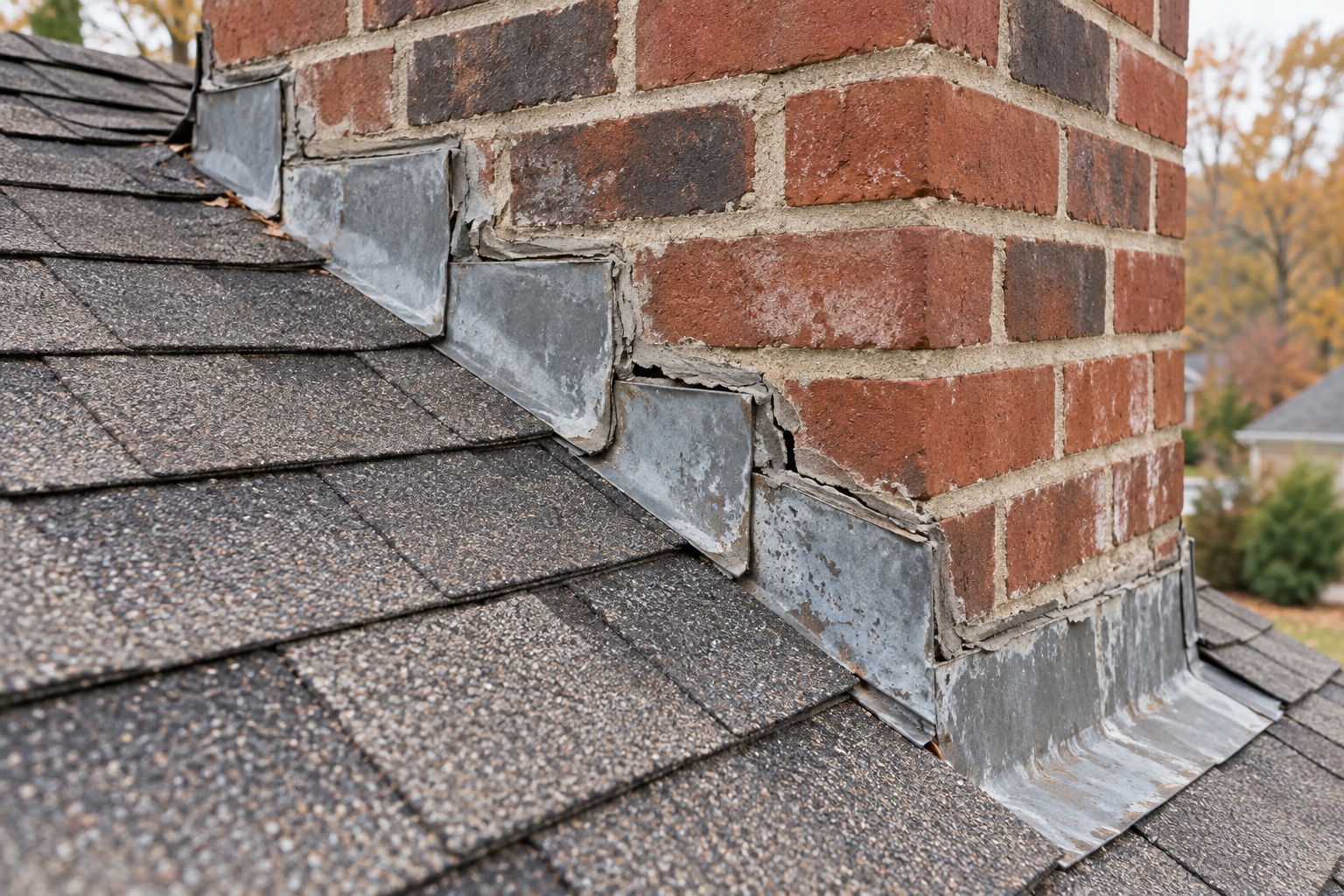
Chimneys usually require several coordinated pieces. Step flashing integrates with the shingle courses, while counterflashing protects the upper edge. Apron and back-pan details help direct water around the chimney.
Potential problems include open mortar joints, displaced counterflashing, corroded metal, failed sealant, and missing or incorrectly installed step flashing.
Roof-to-Wall and Dormer Flashing
Where a sloped roof meets a vertical wall, step flashing is commonly layered with each shingle course. Siding or counterflashing covers the upper portion.
Water problems can develop when step flashing is missing, reused after damage, fastened incorrectly, or replaced with a continuous bead of sealant. A missing kickout at the bottom of a wall can also direct runoff behind siding instead of away from the building.
Valley Flashing
Valleys collect runoff from adjoining roof planes. Depending on the roof design, metal valley flashing may be exposed or covered by shingles.
Debris, foot traffic, incorrect fastening, damaged metal, poor shingle cuts, or improper overlaps can interfere with drainage. Because valleys handle concentrated flow, even a small defect can receive significant water during heavy rain.
Vent-Pipe Flashing and Pipe Boots
Plumbing vents penetrate the roof deck and are commonly protected by metal, plastic, rubber, or combination flashing assemblies.
Flexible collars can crack or separate as they age. Metal bases may corrode, lift, or be installed incorrectly. Fasteners and surrounding shingles should also be checked.
Skylight Flashing
Skylights require a coordinated system that directs water around the top, sides, and bottom of the unit. Problems can result from damaged components, debris buildup, incorrect installation, aging seals, or changes made during reroofing.
A ceiling stain near a skylight does not automatically prove that the skylight itself has failed. The surrounding flashing and roof assembly should be evaluated.
Drip Edge
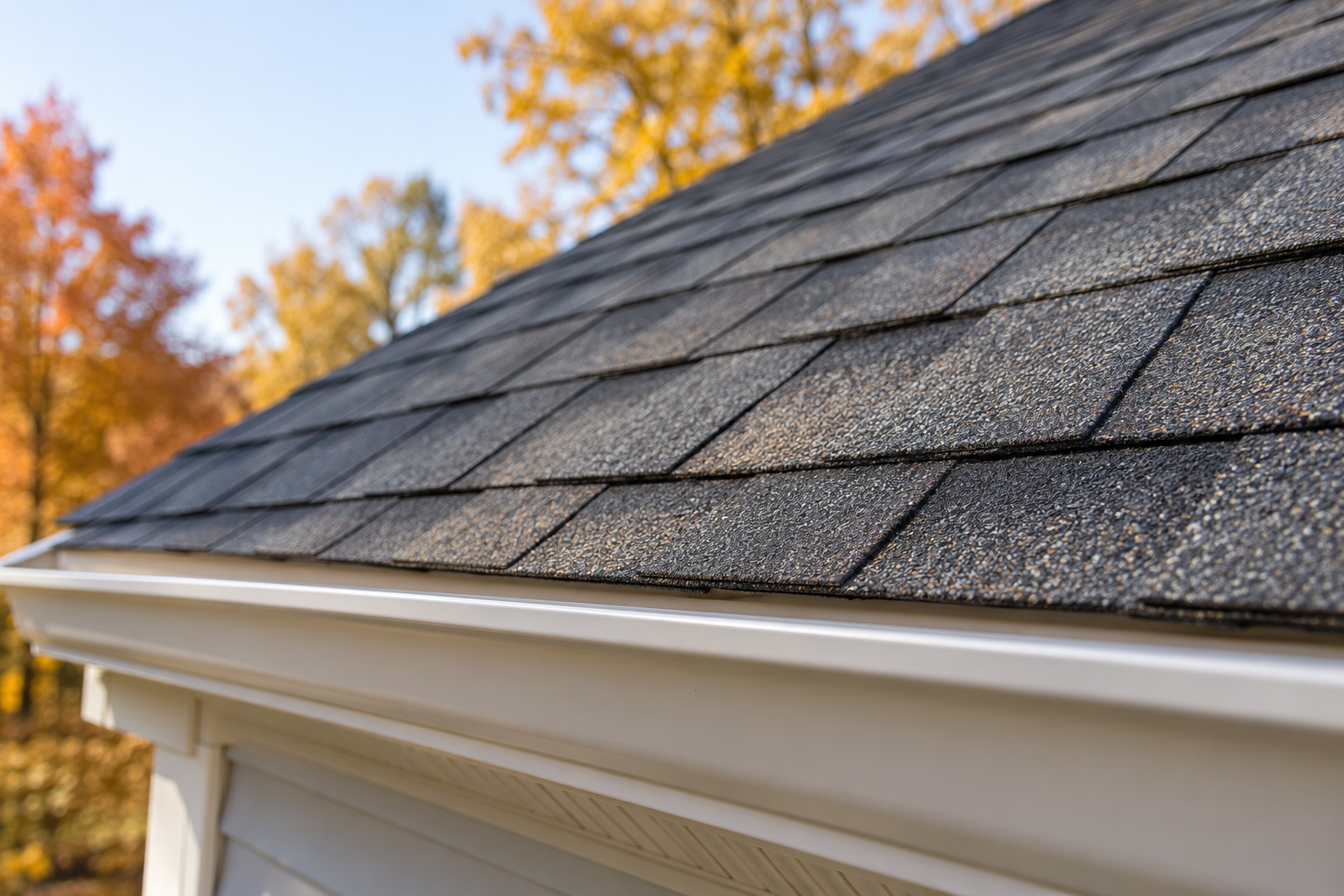
Drip edge is metal flashing installed along roof edges to help guide water away from the roof deck and fascia and toward the gutter system.
Missing, loose, damaged, or improperly placed drip edge can contribute to deterioration near the eaves and rakes.
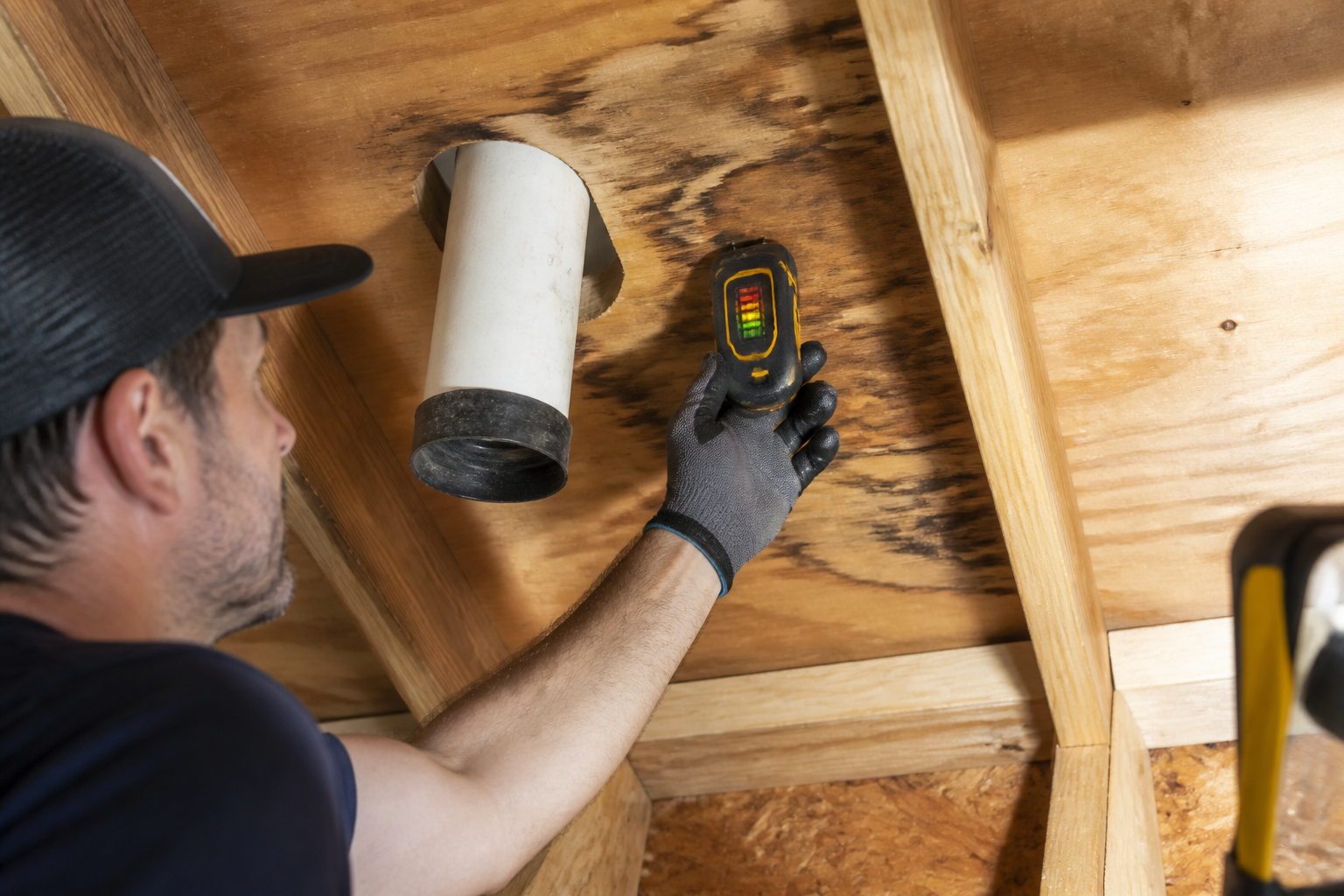
Why the Interior Stain May Not Identify the Entry Point
Water does not always fall straight down from the place where it enters.
After passing beneath a roof covering, moisture may travel along:
- Roof decking
- Rafters or trusses
- Underlayment
- Fasteners
- Plumbing or mechanical penetrations
- Insulation
- Ceiling framing
The visible stain may therefore appear several feet away from the flashing defect. Wind direction and rainfall intensity can also change when a leak becomes noticeable.
This is one reason leak diagnosis can be difficult without professional experience. Repeatedly sealing the area directly above a stain may not correct the actual entry point.
Warning Signs That Flashing Needs Attention
From the ground, a window, or another safe vantage point, homeowners can look for:
- Loose, bent, lifted, or missing flashing
- Rust or corrosion
- Cracked or separated vent boots
- Open joints around chimneys or sidewalls
- Deteriorated exposed sealant
- Debris collecting in valleys or behind chimneys
- Shingles lifting near a penetration
- Dark streaks beneath a roof transition
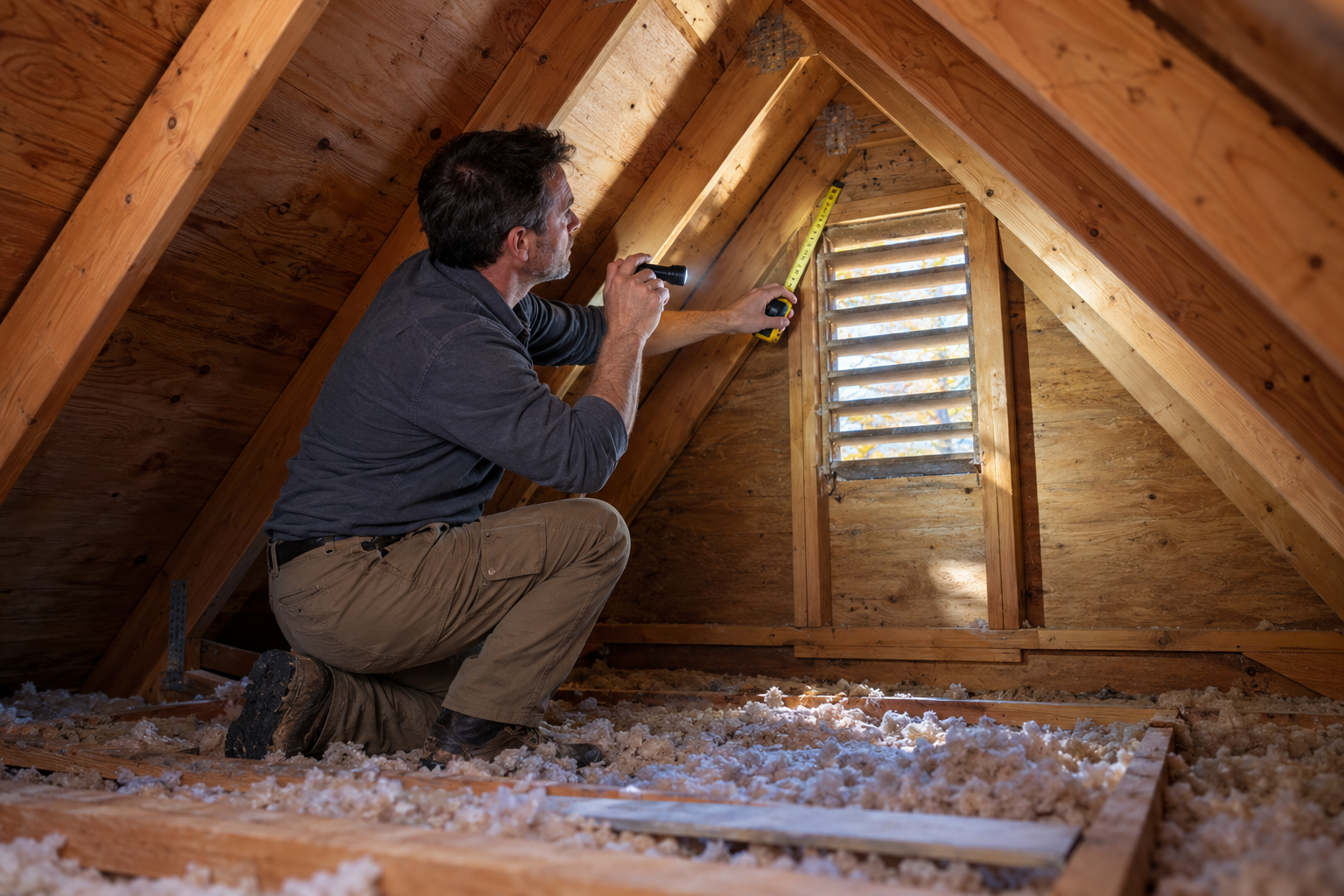
Inside the home or attic, warning signs can include:
- Ceiling or wall stains
- Damp roof decking
- Discolored rafters
- Wet insulation
- Musty odors
- Peeling paint near an exterior wall
- Daylight visible around a penetration
- Dripping during wind-driven rain
These symptoms identify a reason for inspection. They do not confirm the precise source or repair method.
Why Professional Inspection Is Safer
Roof access creates a serious fall risk, especially when shingles or metal are wet. Walking on an aging roof can also damage brittle shingles or vulnerable flashing.
The National Roofing Contractors Association advises homeowners to leave most roof-repair work to trained professionals. A qualified inspector can evaluate the roof while accounting for slope, material condition, safe access, and how the components are intended to work together.
A flashing assessment may consider:
- Material condition and corrosion
- Correct overlaps and water direction
- Fastener placement
- Integration with shingles or siding
- Counterflashing and mortar joints
- Pipe-boot condition
- Valley drainage
- Roof-deck or attic moisture
- Previous temporary repairs
- Whether surrounding materials must be removed for a reliable repair
Repair, Replacement, or Maintenance?
The correct response depends on the flashing material, configuration, damage, and surrounding roof condition.
A limited repair may be appropriate when the metal remains sound and the issue is accessible. Replacement may be necessary when flashing is perforated, badly corroded, incorrectly installed, incompatible with adjacent materials, or damaged during previous roof work.
Simply spreading sealant across a joint may create a short-lived patch or conceal a deeper problem. Reliable repairs should restore the intended water-shedding detail rather than depend entirely on a surface coating.
If reroofing is planned, existing flashing should be evaluated instead of automatically reused. New shingles, roof geometry, or manufacturer requirements may require new flashing even when the old pieces appear acceptable.
Where Roof Max Fits
Roof Max is designed to restore flexibility in qualifying, serviceable asphalt shingles. It treats the asphalt-shingle material—not flashing, penetrations, masonry, siding, roof decking, or active leaks.
Roof Max does not:
- Replace missing or damaged flashing
- Repair cracked pipe boots
- Reseal a leaking skylight
- Correct improper installation
- Repair rotten roof decking
- Stop an active roof leak
- Guarantee against leaks caused by other roof components
Necessary repairs should be identified and completed before treatment. A clear assessment should separate shingle condition from flashing and other roof-system concerns.
Flashing Checks for Central Virginia Homes
Midlothian, Richmond, and surrounding Central Virginia communities experience thunderstorms, wind-driven rain, summer heat, humidity, falling debris, and seasonal temperature changes.
A practical maintenance routine includes:
- Looking at visible roof transitions after major storms.
- Checking ceilings and attic areas after prolonged or wind-driven rain.
- Keeping valleys and drainage paths free of visible debris.
- Photographing changes that can be observed safely from the ground.
- Scheduling a professional inspection when staining, displacement, corrosion, or damaged boots appear.
The goal is not to assume every stain is a flashing failure. It is to recognize that roof transitions are high-priority locations that deserve informed inspection.
Schedule a Roof Assessment
Flashing protects the places where a roof is interrupted or changes direction. Those details are small compared with the full roof, but their water-management role is significant.
Roof Max of Midlothian can assess asphalt-shingle condition and identify visible roof concerns for homeowners in Midlothian, Richmond, Chesterfield, Henrico, and nearby Central Virginia communities.
To request a roof assessment, visit richmondroofrejuvenation.com.