
Roof Restoration Blog | Richmond VA & Central Virginia
Why Attic Ventilation Matters for Your Roof
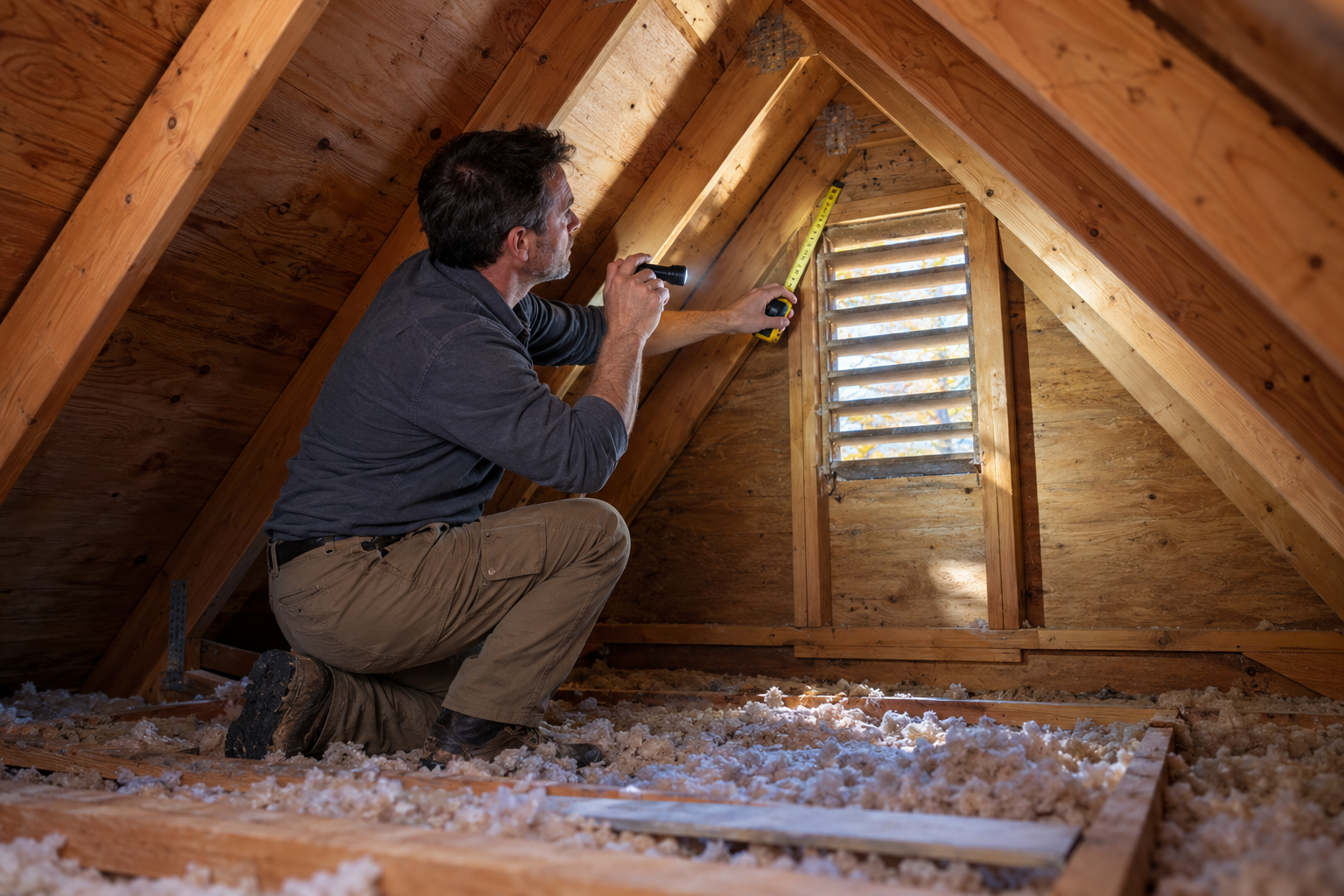
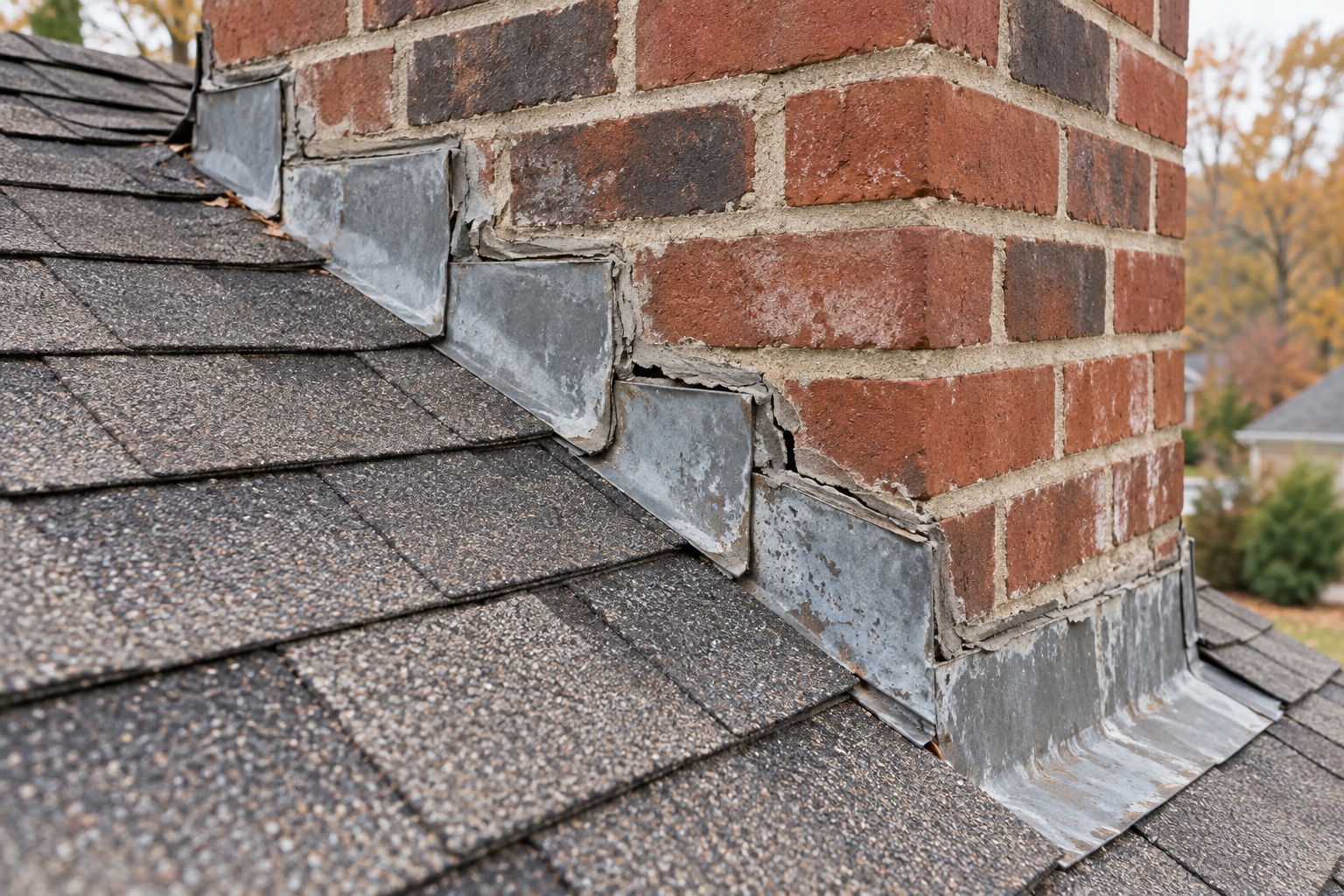
Most homeowners judge a roof from the outside. They look for missing shingles, dark streaks, storm damage, or worn flashing. But an important part of roof performance is hidden inside the attic.
In a properly designed vented attic, ventilation helps move excess heat and moisture out of the space. That matters because the roof deck, insulation, rafters, and fasteners all share the same environment. When airflow is restricted or moisture sources are ignored, those materials may stay hotter or damper than intended.
For homes in Midlothian, Richmond, and surrounding Central Virginia communities, attic ventilation should be viewed as one part of a complete roof-and-home system. It works alongside air sealing, insulation, bathroom and dryer exhaust, and the roof covering itself.
How a Vented Attic Is Supposed to Work
Many unfinished attics use a passive ventilation system with two basic parts:
- Intake ventilation is installed low on the roof, commonly at the soffits or eaves.
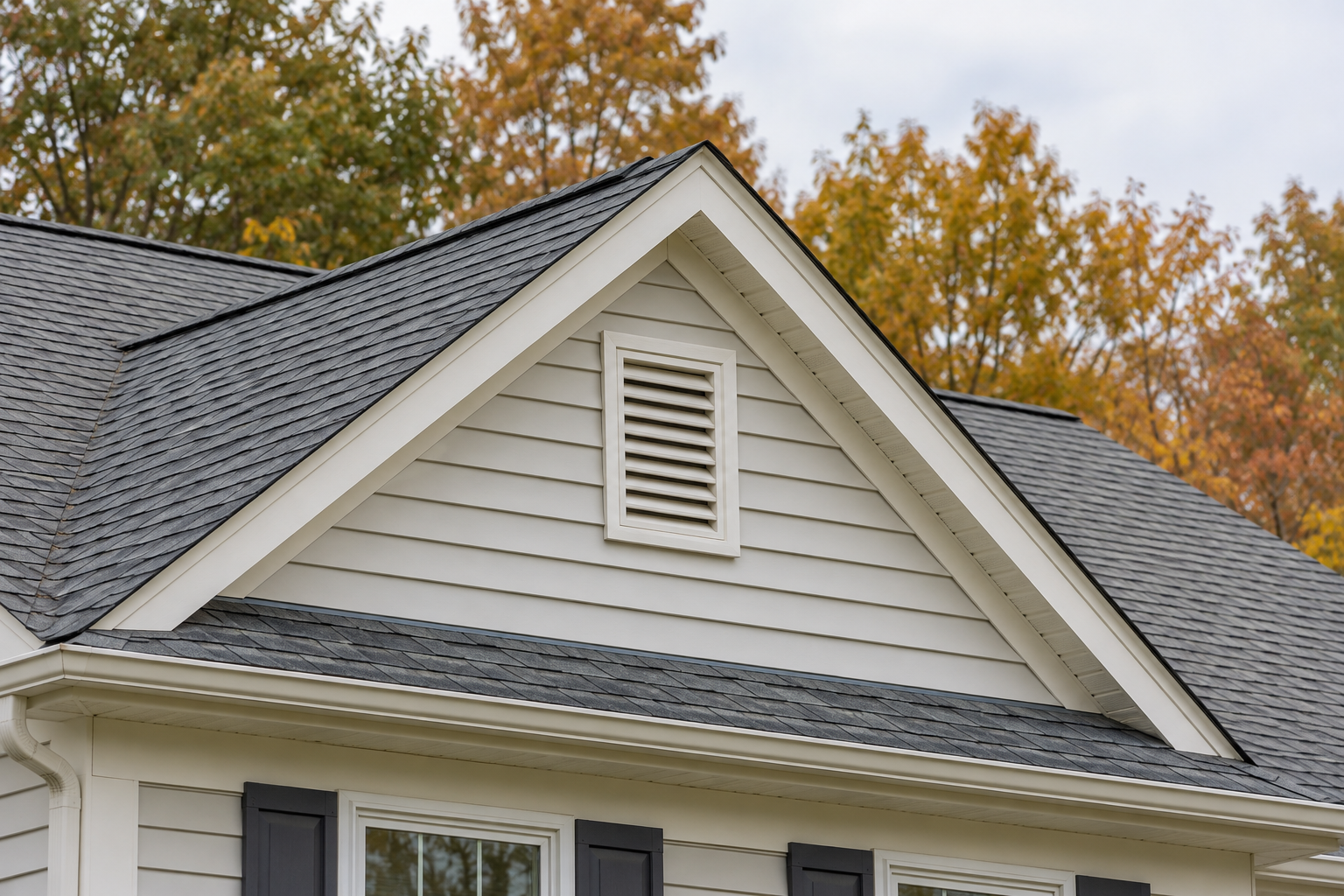
- Exhaust ventilation is installed high on the roof, commonly at or near the ridge.
As outdoor air enters through the lower vents, warmer attic air can leave through the upper vents. The goal is not to create a strong breeze. It is to maintain a continuous, balanced path that helps carry heat and moisture away from the underside of the roof.
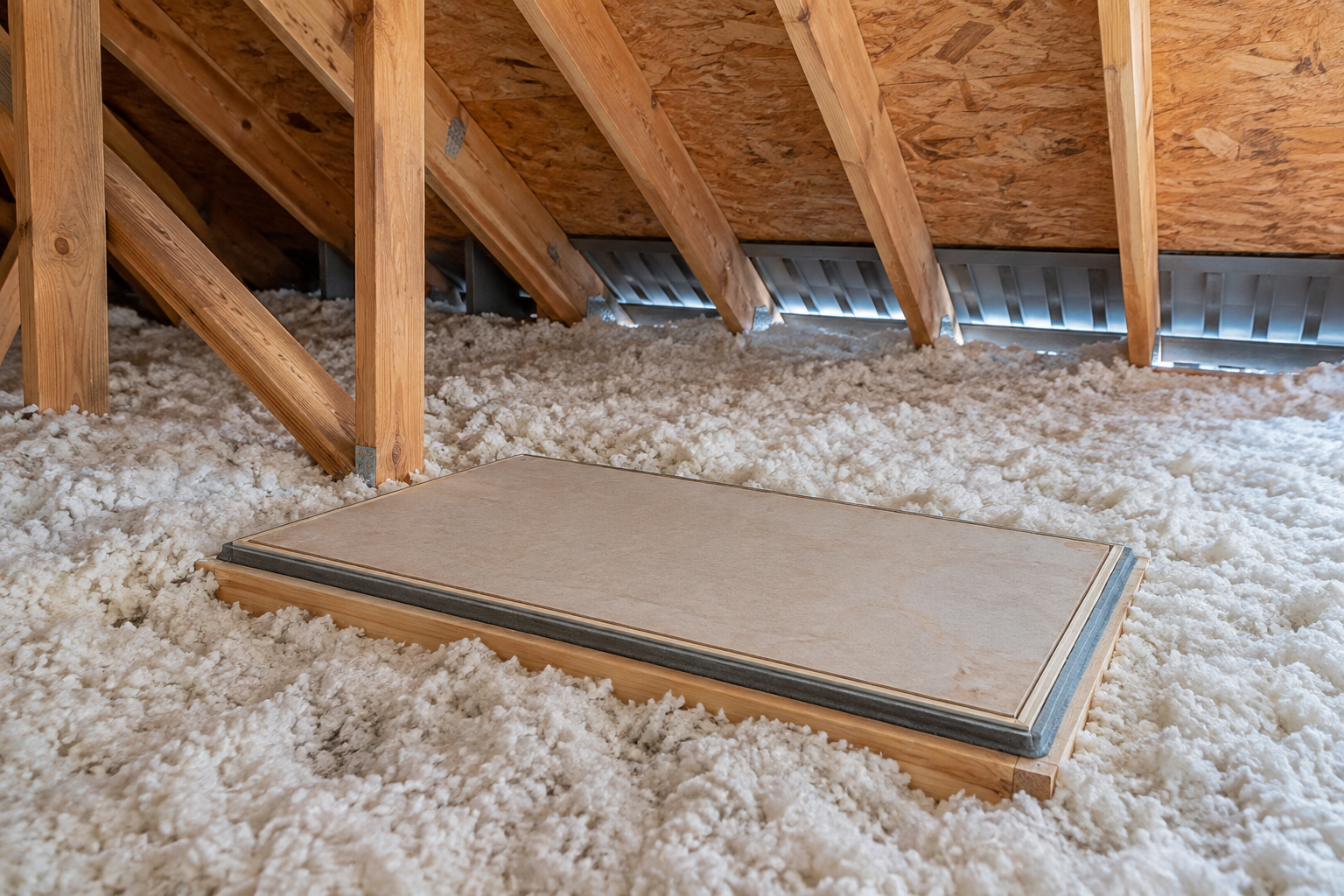
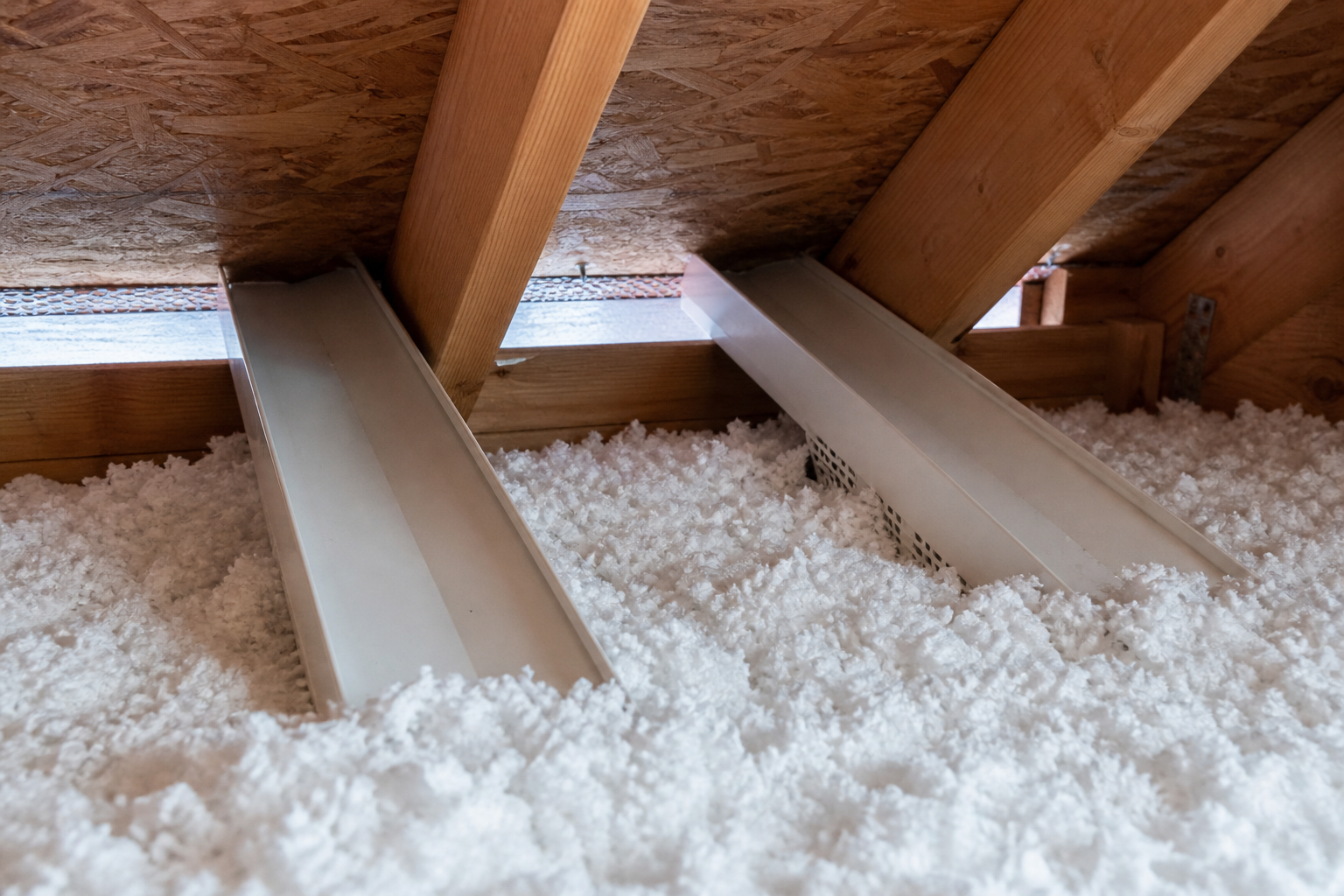
Rafter baffles, sometimes called vent chutes, help preserve that path near the eaves. They keep insulation from blocking soffit vents and guide air upward beneath the roof deck. If insulation is packed tightly against the eaves or a soffit vent is covered, the intended airflow can be reduced even when the exterior vents look fine.
Why Heat Control Matters
Central Virginia summers can place a significant heat load on a roof. Sunlight warms the shingles and roof deck, and the attic below can become very hot. In a vented attic, natural airflow helps move some of that super-heated air outdoors.
Ventilation is not a substitute for insulation. Insulation slows heat transfer into the living space, while ventilation helps manage conditions in the attic itself. Air sealing is also important because it limits the movement of conditioned indoor air into the attic.
These parts should be evaluated together. Adding a powered attic fan to a home with blocked intake vents or major ceiling air leaks may not solve the underlying issue and can sometimes pull conditioned air from the house.
Why Moisture Control Matters
Heat is only half the story. Everyday activities such as bathing, cooking, and doing laundry add moisture to indoor air. Roof leaks can add moisture directly. If warm, humid air reaches a cooler attic surface, condensation may form.
Persistent moisture can contribute to several problems, including:
- Damp or compressed insulation
- Rust on roofing nails or metal components
- Dark staining on rafters or roof sheathing
- Musty odors
- Mold growth when moisture conditions remain favorable
- Deterioration of wood materials over time
Ventilation helps remove excess moisture, but the moisture source must also be addressed. Bathroom, kitchen, and clothes-dryer exhaust should discharge outdoors—not into the attic. Roof leaks require repair, and ceiling penetrations may need appropriate air sealing.
Warning Signs Homeowners Can Notice
You do not need to climb onto the roof to recognize that an attic may need attention. From a safe location, watch for:
- Musty or damp odors near the attic access
- Wet, matted, or discolored insulation
- Condensation or rust on visible nail points and metal parts
- Dark or irregular staining on roof sheathing
- Soffit vents covered by insulation or stored materials
- Bathroom or dryer ducts ending inside the attic
- An attic that remains unusually hot or humid
These signs do not identify a single cause by themselves. A leak, an air-sealing problem, insufficient insulation, blocked vents, or an incorrectly balanced ventilation system can produce similar symptoms. A qualified professional can inspect the entire assembly before recommending changes.
Balance Matters More Than Simply Adding Vents
More ventilation is not automatically better. Intake and exhaust need to be sized and positioned to work together. If a system has exhaust ventilation but too little open intake area, it may not move air as intended. Mixing several exhaust types can also disrupt the preferred airflow path.
The right approach depends on the roof shape, attic design, vent type, insulation, local code requirements, and whether the attic was intentionally designed as a vented or unvented conditioned space. Do not add vents or fans based only on a general rule of thumb. Start with an assessment of the existing design and any visible moisture or heat-related concerns.
A Better Attic Check for Central Virginia Homes
A useful attic and roof evaluation should look beyond the number of vents. It should consider whether:
- Intake openings are present and unobstructed
- Exhaust vents are clear and properly placed
- Rafter baffles maintain airflow at the eaves
- Insulation is even and does not block vents
- Ceiling penetrations allow excess indoor air into the attic
- Bath and dryer exhaust ducts terminate outdoors
- The roof deck shows signs of leaks, staining, or deterioration
This whole-system view is especially helpful in Central Virginia, where hot summers, humid conditions, thunderstorms, and seasonal temperature changes can all affect the roof and attic.
Protect the Roof from Both Sides
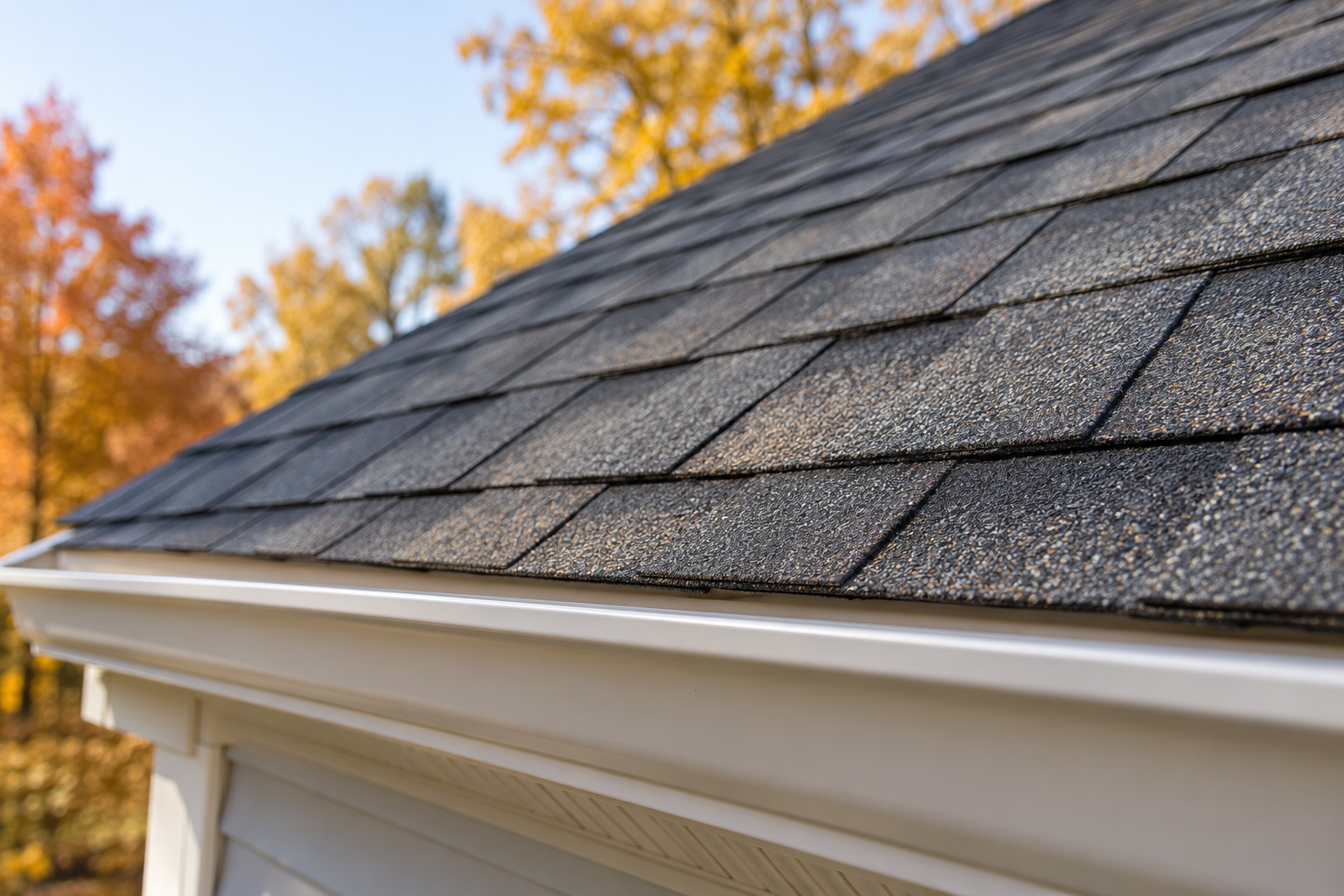
Shingles are the visible weather barrier, but the attic environment beneath them also deserves attention. Balanced ventilation, clear airflow paths, appropriate insulation, and careful air sealing work together to support a more durable roof system.
If you are concerned about attic heat, moisture, blocked vents, or the condition of an aging asphalt roof, Roof Max can help you understand the next practical step. Visit richmondroofrejuvenation.com to learn more or request an evaluation in the Midlothian and Richmond area.