
Roof Restoration Blog | Richmond VA & Central Virginia
What a Solar Attic Ventilation Quote Should Include

When homeowners research solar attic ventilation, the first price they see may cover only the equipment. That number can be useful for comparison, but it does not necessarily represent a complete installed plan for a specific home.
A clear quote should connect the ventilation equipment to the roof and attic. It should explain the recommended mounting option, estimated ventilation needs, proposed placement, installation scope, and site conditions that may affect the work. For homeowners in Richmond, Midlothian, and surrounding Central Virginia communities, an on-site roof and attic evaluation helps turn a general product price into a home-specific recommendation.
Product Price and Installed Price Are Different
The equipment price covers the ventilation unit and its supplied components. An installed quote also needs to account for the work required to place, secure, seal, and weatherproof the equipment correctly for the home.
The scope may differ from one property to another. A roof-mount installation on an accessible asphalt-shingle roof is different from a gable-mount installation or a project involving a steep roof, unusual roof material, limited attic access, restricted solar exposure, or intake ventilation that needs attention.
This is why a responsible quote should describe the proposed work instead of presenting the equipment price as though it applies equally to every home.
Start With the Right Solar Attic Ventilation Option
Richmond Roof Rejuvenation currently offers two 30W solar attic ventilation options:
- 30W roof-mount solar attic ventilation: Uses an adjustable solar panel and low-profile roof-mounted housing.
- 30W gable-mount solar attic ventilation: Uses a remotely positioned solar panel while the ventilation unit is installed at the gable.
The manufacturer publishes airflow of up to 1,550 CFM and an attic-size recommendation of up to 1,500 square feet for both options. Those specifications help with initial planning, but they do not replace an evaluation of the home’s layout, intake airflow, roof configuration, and proposed placement.
The right option is not simply the one with the lowest equipment price. It is the option that fits the attic and can be installed appropriately for the building.
Ventilation Needs Depend on the Home
Living-area square footage is only one part of a ventilation estimate. The Richmond Roof Rejuvenation sizing calculator also considers:
- Home configuration and number of stories
- Roof color
- Roof type
- Attached or detached garage layout
- Attached-garage size
These inputs help estimate attic area and likely ventilation needs. Roof material and unusually large requirements may call for additional review. The calculator is a planning tool; the final recommendation should come from the site evaluation.
Homeowners can begin with the Solar Attic Ventilation Sizing Calculator at:
https://richmondroofrejuvenation.com/solar-attic-ventilation-sizing-calculator
Placement and Available Sunlight Matter
Solar-powered attic ventilation operates when adequate sunlight is available. The quote should explain where the roof-mounted unit or remote solar panel is expected to go and whether that location provides suitable exposure.
Placement also needs to work with the attic layout and the path for replacement air. A convenient exterior location is not automatically the best ventilation location. The proposed setup should consider how air will move through the attic, where intake vents are located, and whether those intake paths appear open.
What the Installed Quote Should Cover
Before comparing proposals, make sure they describe the same equipment and work. A home-specific quote should identify the following items clearly.
Mounting option and ventilation needs
The proposal should identify the 30W roof-mount or 30W gable-mount option and state the recommended number of ventilation units. It should also explain the home details used to reach that recommendation.
Proposed placement
The quote should show where the ventilation unit and solar panel will be located. For a gable-mount setup, the solar panel is positioned remotely from the ventilation unit.
Installation and weatherproofing
The scope should explain what is included for mounting, roof or gable preparation, sealing, weatherproofing, supplied hardware, job-site protection, and cleanup. If roof repairs or ventilation corrections are recommended first, those items should be clearly identified.
Intake airflow review
Powered exhaust ventilation needs a path for replacement air. The evaluation should consider the existing soffit vents or other intake openings and identify visible restrictions that may affect the proposed setup.
Site conditions and exclusions
Roof pitch, roof material, access, attic framing, obstacles, solar exposure, and repair needs can affect installation. A useful quote should explain what is included and what conditions could change the final scope or price.
What the Roof and Attic Evaluation Can Confirm
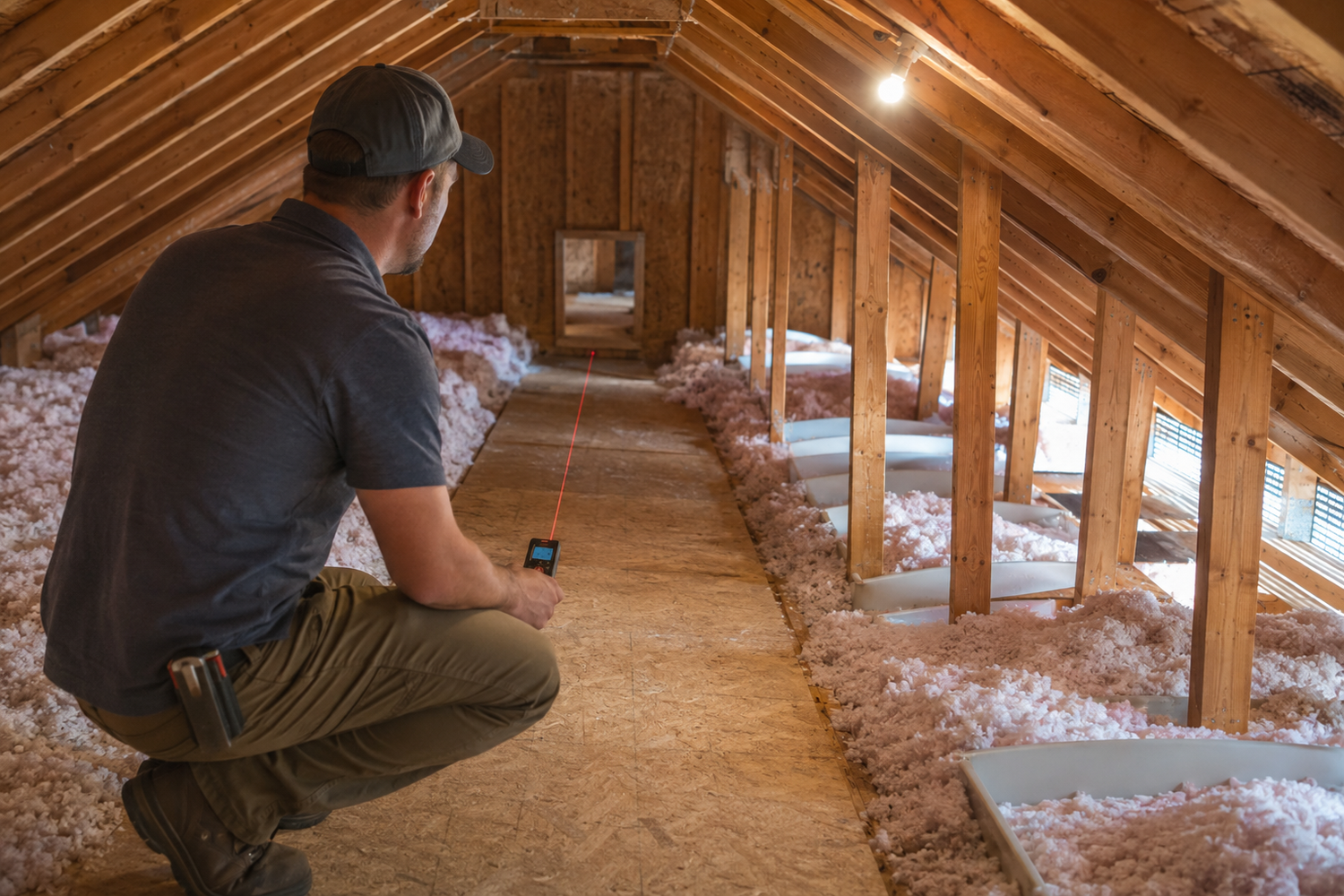
An on-site visit gives the installer information that a website or calculator cannot fully capture. The evaluation may confirm:
- Approximate attic area and home configuration
- Attached-garage area that may share attic space
- Roof color, material, pitch, and condition
- Roof-mount or gable-mount suitability
- Solar exposure at the proposed panel location
- Existing soffit or other intake ventilation
- Attic and roof access
- Obstacles, repair needs, or unusual installation conditions
- Recommended ventilation setup and installed scope
These details help explain why two homes with similar square footage may receive different recommendations or quotes.
Solar Power Does Not Mean No Upfront Cost
Solar attic ventilation uses sunlight to operate, so it does not add an ongoing electricity charge when running on available solar energy. That does not make the equipment or installation free.
The upfront quote still reflects the selected option and the work required for the home. Any projected energy savings should remain an estimate because actual results depend on factors such as home design, attic condition, insulation, HVAC use, utility rates, ventilation layout, and weather.
Homeowners who want a planning estimate can use the Attic Ventilation Savings Estimator at:
https://richmondroofrejuvenation.com/attic-ventilation-savings-estimator
Questions to Ask Before Comparing Quotes
Use these questions to understand what each proposal includes:
- Which mounting option is recommended, and why?
- What ventilation estimate supports the recommended quantity?
- Where will the ventilation unit and solar panel be placed?
- What installation, sealing, weatherproofing, and cleanup work is included?
- Has existing intake airflow been considered?
- Are roof repairs or ventilation corrections recommended first?
- Are taxes, permits, or optional work included or excluded?
- What site conditions could change the price after the evaluation?
A clear proposal should make those answers easy to find. If two quotes include different equipment, preparation, or installation work, comparing only the total price can hide important differences.
Schedule a Free Roof and Attic Evaluation in Central Virginia
Richmond Roof Rejuvenation helps Central Virginia homeowners protect their roof system from the outside and the inside. Roof Maxx Rejuvenation helps restore aging asphalt shingles, while solar attic ventilation helps reduce heat and moisture stress from inside the attic.
To discuss solar attic ventilation and request a home-specific quote in Richmond, Midlothian, or a surrounding Central Virginia community, schedule a free roof and attic evaluation at:
https://richmondroofrejuvenation.com/solar-attic-ventilation